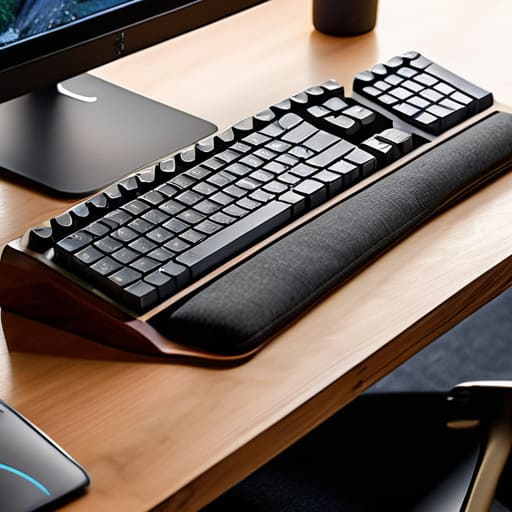
Category: Productivity

  • Using Wrist Rests for Better Typing Comfort

    Using Wrist Rests for Better Typing Comfort

    I was sitting in a cramped cafe in Lisbon last month, trying to push through a complex cloud migration script, when that familiar, sharp ache flared up in my forearm. I had been working on my custom 65% build for three hours straight, and my setup—while aesthetically clean—was missing one crucial element. Most people think you need to drop $100 on some ergonomic “solution” that looks like a medical device to save your joints, but the truth is that most keyboard wrist rests on the market are just overhyped, bulky pieces of foam that clutter your desk and kill your portability. If a piece of gear doesn’t actually disappear into your workflow, it’s just more friction you don’t need.

    I’m not here to sell you on some overpriced gel cushion that’s going to sweat against your skin after a week. Instead, I want to talk about finding tools that actually integrate into a mobile, high-performance lifestyle. I’ve tested everything from minimalist wood slabs to ultra-slim memory foam to see what survives a life on the move. I’m going to show you how to pick keyboard wrist rests that provide genuine, invisible support without turning your compact desk into a cluttered mess.

    Table of Contents

    Achieving Optimal Wrist Alignment Without the Bulk

    Achieving Optimal Wrist Alignment Without the Bulk

    When I’m working out of a cafe or a cramped Airbnb, the last thing I want is a massive, chunky piece of plastic cluttering my workspace. I need something that supports my hands without turning my desk into a permanent construction site. Achieving optimal wrist alignment is less about finding the biggest cushion and more about finding the right height relative to your specific board. If you’re using a high-profile mechanical keyboard, a thin, low-profile support is usually the way to go to keep your tendons from screaming after a long session.

    The real debate usually boils down to gel vs foam wrist rests, and honestly, it depends on your typing style. I personally prefer a firm foam; it doesn’t bottom out under pressure, which is crucial when you’re deep in a flow state. Gel can feel great for the first twenty minutes, but it often lacks the structural integrity needed for long-term support. If you’re serious about preventing repetitive strain injury while maintaining a mobile, minimalist kit, look for something slim and high-density. It should feel like an extension of your desk, not an obstacle.

    Preventing Repetitive Strain Injury in Mobile Workflows

    Preventing Repetitive Strain Injury in Mobile Workflows

    When you’re bouncing between cafes or working from a cramped Airbnb, your setup usually takes a hit. It’s easy to justify a subpar angle because “it’s just for a few hours,” but that’s exactly how chronic issues start. If you’re serious about preventing repetitive strain injury, you can’t treat your physical health as an afterthought. I’ve learned the hard way that even the best cloud-based workflow won’t matter if your hands are too inflamed to type.

    The trick is finding a balance between support and portability. I used to think anything soft was fine, but there’s a massive difference between gel vs foam wrist rests when you’re looking for long-term stability. Gel tends to hold its shape better during intense coding sessions, while foam is lighter for the nomad life. Ultimately, the goal is to maintain optimal wrist alignment regardless of whether you’re at a dedicated desk or a tiny bistro table. Don’t let a lack of proper support become a permanent bottleneck in your career.

    My Rules for Picking a Rest That Actually Works

    • Prioritize low-profile designs. If your wrist rest is a massive, chunky block, it’s going to throw off your entire ergonomic angle, especially when you’re working on a coffee shop table that isn’t perfectly level.
    • Go for materials that breathe. I’ve learned the hard way that cheap foam or solid silicone traps heat. You want something like high-density memory foam or even a slim gel layer that doesn’t make your hands sweat after an hour of deep work.
    • Think about portability over everything. If it doesn’t slide easily into your tech pouch or laptop sleeve, it’s just extra weight you’re carrying for no reason. A dedicated, slim rest is a tool; a bulky one is just luggage.
    • Match the height to your specific board. Since I switch between different mechanical keyboards, I’ve realized there is no “one size fits all.” A rest that works for a low-profile membrane board will feel completely wrong under a heavy, high-profile custom build.
    • Look for “set it and forget it” textures. You don’t want a surface that’s so grippy it feels like it’s pulling at your skin, but you also don’t want something so slick that your wrists slide off mid-sentence. Aim for a matte, seamless finish.

    The Bottom Line for Your Mobile Setup

    Prioritize low-profile, slim designs that don’t add unnecessary weight to your tech bag; if it’s too bulky to toss in your backpack, it’s not a tool, it’s a burden.

    Look for materials that feel natural under your skin—avoid cheap, sweaty plastics in favor of something that lets you stay in the zone without distraction.

    Don’t treat a wrist rest as an afterthought; it’s a fundamental part of your ergonomics that keeps your workflow sustainable when you’re working from a cafe or a temporary desk.

    The Invisible Essential

    “A good wrist rest shouldn’t feel like a piece of hardware you’re lugging around; it should be so seamless that it just disappears, leaving you with nothing but the flow.”

    Elias Vandermeer

    Finding Your Flow

    Ergonomic wrist rests for Finding Your Flow.

    At the end of the day, choosing a wrist rest isn’t about buying more gear; it’s about removing the friction between your hands and your code. We’ve looked at how to maintain alignment without turning your portable setup into a bulky mess, and why prioritizing ergonomics is the only way to keep a mobile workflow sustainable. Whether you opt for a slim foam pad that slides into your tech pouch or a custom-built wooden piece for your stationary desk, the goal remains the same: minimizing physical distraction. If you’re constantly adjusting your posture or feeling that dull ache in your tendons, your tools aren’t serving you—they’re actively working against your ability to focus.

    Don’t let your hardware dictate your limits. A truly professional setup is one that feels like an extension of your own body, allowing you to sink into deep work regardless of whether you’re in a quiet cafe or a temporary co-working space. Invest in the small details that protect your long-term health, because your career is a marathon, not a sprint. Build a setup that supports your ambition and stays out of your way, so you can spend less time managing discomfort and more time actually building things that matter.

    Frequently Asked Questions

    How do I find a wrist rest that actually fits in my tech pouch without adding unnecessary weight to my carry?

    Look, if you’re anything like me, every gram in your tech pouch matters. Forget those massive, chunky foam blocks; they’re dead weight. I look for slim, high-density silicone or even felt-based rests that fold flat. If it doesn’t slide into a side pocket of your organizer without bulging, it’s not worth the space. Aim for something low-profile that prioritizes material density over sheer volume. Keep it thin, keep it light, and keep moving.

    Is it better to go with a firm foam support or something more squishy like gel when I'm working from a cafe?

    If you’re working from a cafe, go with firm foam. Gel feels great for the first twenty minutes, but once it warms up, it loses its structure and starts feeling mushy, which actually messes with your alignment. A high-density foam rest stays consistent regardless of the ambient temperature or how long you’ve been grinding. It’s more predictable, takes up less space in your tech pouch, and keeps your wrists steady on those uneven cafe tables.

    Can I use a wrist rest with a compact or 65% mechanical keyboard, or do they only work with full-sized setups?

    Absolutely. In fact, I’d argue they’re even more essential for compact boards. When you’re running a 65% or a 60% layout, your hands are naturally closer to the edge of the desk, which can actually increase strain if you aren’t careful. You just need to be intentional about the size. Look for slim, low-profile rests that match the shallower depth of your board so you don’t create a weird angle that breaks your flow.

  • Adding Plants to Your Home Office for Better Focus

    Adding Plants to Your Home Office for Better Focus

    I used to think that adding greenery to a workspace was just another way for people to overcomplicate a minimalist setup with unnecessary maintenance and clutter. I’ve spent years perfecting cable management and optimizing cloud latency, so the idea of “decorating” felt like a distraction from actual deep work. But after months of staring at nothing but cold aluminum and matte black surfaces in various Airbnbs, I realized I was missing something vital. It turns out that the real home office plant benefits aren’t about making your desk look “aesthetic” for a social media post; they’re about breaking the sterile, digital vacuum that kills your focus when you’re grinding through a long deployment.

    I’m not here to sell you on some expensive, high-maintenance jungle that requires a degree in botany to keep alive. I’m going to show you how to integrate a few low-friction living elements that actually serve your workflow without becoming another chore on your to-do list. We’re talking about practical, durable choices that improve your air quality and mental clarity while staying out of the way of your hardware. If you want to build a workspace that actually feels human, here is how you do it without the fluff.

    Table of Contents

    Natural Air Purification Indoor Plants for Seamless Focus

    Natural Air Purification Indoor Plants for Seamless Focus

    When I’m deep in a systems integration sprint, the last thing I want to deal with is stale, recycled air making my head feel heavy. It’s a subtle thing, but a stuffy room is a productivity killer. This is where natural air purification indoor plants actually earn their keep. I’m not talking about a complex garden, but rather a few strategic pieces like a Snake Plant or a Peace Lily that act as silent, organic filters. They scrub the air of toxins while I’m busy debugging code, helping to keep my mental clarity sharp without me having to lift a finger.

    For my setup, I prioritize low maintenance office greenery because, frankly, I don’t have time to baby a high-maintenance fern. If a plant requires a daily misting schedule, it’s just another piece of “clutter” fighting for my attention. I look for species that thrive on neglect. By integrating these living elements, you’re essentially upgrading your environment’s hardware. It’s about creating a seamless ecosystem where the air quality supports your focus rather than working against it.

    Reducing Workplace Stress With Plants to Maintain Momentum

    Reducing Workplace Stress With Plants to Maintain Momentum

    When I’m deep in a complex systems integration, my brain can start to feel like it’s redlining. The mental fatigue is real, especially when you’re staring at terminal windows for six hours straight. I’ve found that having some low maintenance office greenery nearby acts like a manual reset button for my focus. It isn’t about making a “pretty” space; it’s about breaking that visual monotony that leads to burnout.

    There is a genuine psychological impact of indoor greenery that most people overlook in their quest for a sterile, high-tech aesthetic. Instead of a cold, empty desk, a bit of life around your peripherals helps lower your cortisol levels without being a distraction. For me, it’s about reducing workplace stress with plants so I can stay in the zone longer. You don’t need a jungle—just a few resilient species that won’t die the moment you change your location or travel for a week. Keeping the environment soft helps you maintain momentum when the troubleshooting gets heavy.

    Low-Maintenance Integration: Keeping Your Setup Green Without the Friction

    • Stick to “set and forget” varieties like Snake Plants or Pothos; if you’re constantly worrying about watering schedules, they’re just another piece of technical debt in your workspace.
    • Match your plant’s light requirements to your desk’s position—don’t force a high-maintenance tropical into a dark corner just because it looks good in a mockup.
    • Use smart moisture sensors if you’re prone to overwatering; I’d rather spend ten seconds checking an app than replacing a dead succulent every month.
    • Keep the footprint minimal; choose slim, vertical planters that don’t eat into your desk real estate or mess up your cable management.
    • Group your greenery near your primary workstation to maximize the visual connection during deep work sessions, but keep them far enough away that a spill doesn’t fry your hardware.

    Quick Wins for a Better Setup

    Don’t overcomplicate it; pick a few low-maintenance plants that clean the air without requiring a constant maintenance schedule that breaks your flow.

    Use greenery as a visual reset to lower your cortisol levels when you’ve been staring at a terminal or a cloud dashboard for too long.

    Treat plants as functional components of your workspace, not just decor, to help maintain a calm, focused environment anywhere you land.

    ## The Aesthetic of Functionality

    “At the end of the day, a workspace shouldn’t just be a collection of hardware and cables; adding a bit of life into the setup breaks that sterile, digital fatigue and actually makes the environment feel like somewhere you can sustain deep work for the long haul.”

    Elias Vandermeer

    Final Thoughts on a Living Setup

    Final Thoughts on a Living Setup.

    At the end of the day, adding plants to your setup isn’t just about aesthetics or making your desk look good for a quick social media post. It’s about building a functional ecosystem that supports your brain while you’re deep in a flow state. We’ve looked at how they scrub the air to keep your focus sharp and how they act as a natural buffer against the mental fatigue that comes with back-to-back sprints. Whether you’re managing complex cloud migrations or just trying to stay sane during a long deployment, these small, living additions help minimize the friction between you and your work.

    My philosophy has always been that your tools should be invisible, and honestly, I think plants fit that perfectly. They don’t require a software update or a massive power draw; they just exist to make your environment feel less like a sterile server room and more like a space where you can actually thrive. Don’t overthink it—you don’t need a jungle, just a few low-maintenance pieces that move with your lifestyle. Invest in a bit of greenery and let your workspace evolve alongside you. It’s one of the simplest ways to ensure your setup is working as hard as you are.

    Frequently Asked Questions

    Which low-maintenance plants actually survive in a setup with minimal natural light?

    If you’re working in a corner with zero windows, don’t stress. You don’t need a greenhouse; you just need survivors. I usually go with Snake Plants or ZZ Plants—they’re basically indestructible and thrive on neglect. If you want something that looks a bit more “organic” near your monitors, a Pothos is your best bet. They handle low light easily and won’t die just because you forgot to water them during a heavy sprint.

    How do I integrate greenery into a minimalist, cable-managed desk without creating more clutter?

    Keep it small and intentional. If you’re running a clean, cable-managed setup, you don’t want a massive ceramic pot swallowing your desk real estate. Go for small succulents or a single snake plant in a sleek, matte planter that matches your tech aesthetic. Tuck them into the corners or near your monitor stand to fill negative space without breaking your flow. If it doesn’t serve the minimalism, it’s just more noise.

    Are there specific plants that help with air quality without requiring a heavy, high-maintenance watering schedule?

    If you’re looking to keep your setup clean without adding “plant parent” to your to-do list, go for Snake Plants or ZZ plants. They’re basically indestructible and thrive on neglect, which is perfect when you’re traveling or deep in a sprint. If you want something that actually cleans the air while looking sharp, a Pothos is your best bet. They grow fast, handle low light well, and won’t die if you forget them for a week.

  • Cloud Computing Solutions for Small Remote Teams

    Cloud Computing Solutions for Small Remote Teams

    I was sitting in a cramped cafe in Lisbon last month, trying to troubleshoot a client’s server migration over a Wi-Fi connection that had the stability of a house of cards. It hit me again: most people treat “enterprise-grade” tech like it’s some sacred, untouchable monolith that requires a dedicated IT department and a massive budget. But honestly? That’s a lie. For most of us, the real struggle isn’t about having the most expensive stack; it’s about finding cloud computing for small teams that actually works without requiring a PhD to maintain. If your tools aren’t invisible, they’re just digital clutter slowing you down.

    I’m not here to sell you on some shiny, overhyped SaaS platform that promises the world and delivers nothing but a monthly subscription headache. Instead, I want to show you how to build a setup that actually moves with you. I’m going to break down the practical, no-nonsense ways to leverage the cloud so your workflow stays seamless, whether you’re at a dedicated desk or a tiny table in a transit hub. We’re focusing on zero-friction tools that let you stop managing infrastructure and start actually doing the work.

    Table of Contents

    Saas Solutions for Startups Tools That Disappear Into Your Workflow

    Saas Solutions for Startups Tools That Disappear Into Your Workflow

    The real goal with SaaS solutions for startups isn’t just about checking boxes on a software list; it’s about finding tools that actually stay out of your way. I’ve seen too many founders waste hours fighting with clunky, fragmented software that requires constant manual syncing. You want cloud-based workflow automation that handles the repetitive, soul-crushing tasks in the background so you can actually focus on building your product. When your tools talk to each other seamlessly, you stop being a glorified administrator and start being a creator again.

    I’m a big believer in the “set it and forget it” mentality. Whether you’re using collaborative cloud platforms for project management or specialized tools for your dev stack, the interface should feel like an extension of your thought process, not a barrier. If you have to stop what you’re doing to troubleshoot a connection or manually upload a file, the tool has failed you. The best tech is the kind that becomes invisible the moment you start working.

    Collaborative Cloud Platforms Work Where You Are Not Where You Sit

    Collaborative Cloud Platforms Work Where You Are Not Where You Sit.

    The real problem with most teams isn’t a lack of talent; it’s the friction caused by trying to sync work across different time zones and locations. If you’re still emailing versions of a spreadsheet back and forth, you’re losing hours of deep work to pure administrative chaos. I’ve seen it happen in almost every small setup I’ve worked with—people spending more time managing the file than actually doing the job. This is where collaborative cloud platforms change the game. They act as a single source of truth that exists independently of your physical hardware.

    When you move your core operations to these platforms, you aren’t just sharing documents; you’re building a synchronized environment. Whether you’re sitting in a cafe in Lisbon or a co-working space in Tokyo, the setup remains identical. Integrating cloud-based workflow automation into these platforms is the next logical step to ensure that repetitive tasks don’t eat your bandwidth. The goal is to create a system where the tech is so quiet and reliable that you forget it’s even there, allowing you to focus entirely on the output.

    Five ways to stop fighting your tech and start actually working

    • Audit your “local-first” habits. If you’re still saving critical files to your desktop instead of a synced cloud drive, you’re one hardware failure away from a disaster. Move everything to the cloud so your files follow you, not your laptop.
    • Prioritize “Single Sign-On” (SSO) tools. Managing twenty different passwords for twenty different SaaS apps is a massive time sink. Use a centralized identity provider so you can jump between tools without the friction.
    • Test your stack on bad Wi-Fi. It’s easy to feel productive in a high-speed office, but real remote work happens in coffee shops and transit hubs. If your cloud tools require a perfect connection to function, they aren’t the right tools for a mobile team.
    • Automate the boring stuff with low-code integrations. Use tools like Zapier or Make to connect your cloud apps. If you’re manually moving data from a form to a spreadsheet, you’re wasting brainpower that should be spent on actual systems integration.
    • Set up a “Cloud-First” permission hierarchy from day one. Don’t wait until you’re scaling to figure out who can edit what. Get your folder structures and access levels right early on so you don’t end up with a chaotic mess of shared links and security holes.

    The Bottom Line: Moving Beyond the Desk

    Stop thinking about software as a destination; if your tools aren’t cloud-native, they’re just anchors preventing you from actually being mobile.

    Prioritize seamless integration over feature bloat—the best tools are the ones you forget are even running because they just work.

    Build your workflow around flexibility, not fixed locations, so your setup can adapt to a cafe in Lisbon or a quiet corner in a small town without missing a beat.

    The Death of the Stationary Office

    If your team’s entire workflow depends on being plugged into a specific server in a specific room, you aren’t running a modern business—you’re just managing a digital anchor. Cloud computing isn’t about “scalability” or corporate buzzwords; it’s about making sure your tools move as fast as you do.

    Elias Vandermeer

    The Bottom Line

    The Bottom Line: cloud-first business productivity.

    At the end of the day, transitioning to a cloud-first model isn’t just about checking a box for “modernization.” It’s about removing the friction that kills productivity. We’ve looked at how the right SaaS tools can become invisible layers of your workflow and how collaborative platforms allow your team to stay synced regardless of their time zone or Wi-Fi stability. If you’re still relying on local servers or manual file transfers, you aren’t just being cautious—you’re actively building bottlenecks into your business. Moving to the cloud means your infrastructure finally matches the speed of your ideas, allowing you to scale without the physical baggage of a traditional office.

    Don’t get caught up in the hype of every new shiny tool that drops on Product Hunt. Instead, focus on building a stack that is truly portable and seamless. Your goal should be to create a digital environment where the tech gets out of your way so you can actually do the work you started this journey for in the first place. Stop letting clunky, stationary setups dictate where you can and cannot be successful. Build your workflow around your life, keep your data in the cloud, and stay mobile. The freedom to work from anywhere isn’t a luxury anymore—it’s the standard.

    Frequently Asked Questions

    How much am I actually going to spend on monthly subscriptions if I move everything to the cloud?

    Look, the “subscription trap” is a real fear, but it’s usually just bad planning. If you’re moving everything to the cloud, you aren’t just buying software; you’re buying back your time and mobility. For a small team, expect to spend anywhere from $30 to $100 per user, depending on how deep you go into the ecosystem. It feels like a lot until you realize you’ve just eliminated the massive upfront costs of hardware and local servers.

    What happens to my data if the Wi-Fi cuts out or I'm stuck in a spot with terrible connectivity?

    Look, I’ve been in plenty of cafes where the Wi-Fi just gives up on you mid-sync. It’s stressful, but it shouldn’t be a dealbreaker. Most modern cloud tools use local caching—they save your changes to your device first and then silently push everything to the cloud once you’re back online. My rule? Always work in apps with robust offline modes. If the tool can’t handle a spotty connection, it’s not worth your time.

    How do I make sure my team's files stay secure when they're accessing everything from different locations?

    Look, the “work from anywhere” dream turns into a nightmare the second someone uses a public cafe Wi-Fi to access sensitive data. You can’t rely on luck. You need to enforce a Zero Trust model—basically, never trust, always verify. Start with mandatory MFA (multi-factor authentication) and a solid VPN or a SASE framework. If your files aren’t encrypted at rest and in transit, you’re just waiting for a breach to happen.

  • Organizing Your Virtual Workspace for Efficiency

    Organizing Your Virtual Workspace for Efficiency

    I was sitting in a cramped cafe in Tallinn last month, staring at a screen that refused to sync, surrounded by people preaching about “productivity hacks” and expensive, bloated software suites. It’s honestly exhausting. Most advice on virtual workspace organization feels like it was written by someone who has never actually had to troubleshoot a cloud deployment on a shaky hostel Wi-Fi connection. They want you to buy more subscriptions and build complex hierarchies, but all that does is add digital friction. If your setup requires a manual just to find your latest project file, it’s not organized—it’s just a cluttered mess disguised as a system.

    I’m not here to sell you on a new “all-in-one” ecosystem or a dozen shiny new apps. My goal is to show you how to build a setup that actually gets out of your way. I’m going to share the exact, stripped-back frameworks I use to keep my workflows seamless and portable, no matter where I’m working from. We’re going to focus on invisible workflows and cloud-native tools that prioritize focus over features. Let’s stop managing our tools and actually start doing the work.

    Table of Contents

    The Art of Invisible Workflows Through Digital Decluttering Techniques

    The Art of Invisible Workflows Through Digital Decluttering Techniques.

    Most people think decluttering is about cleaning a physical desk, but if your desktop is a graveyard of “final_v2_REAL_final.pdf” files, your physical space doesn’t matter. To me, true productivity comes from implementing strict file naming conventions that make searching feel instantaneous. I don’t want to spend ten minutes hunting for a configuration script; I want to type three characters and have it appear. A solid cloud storage hierarchy is the backbone of this. If your folder structure is a mess, you aren’t working; you’re just managing chaos.

    The goal is to reach a state where your tools don’t demand your attention. I spend a lot of time on digital decluttering techniques specifically to strip away the friction of my setup. This means aggressive notification management and pruning any software that doesn’t serve an immediate purpose. When you focus on minimizing digital distractions, you stop reacting to every ping and start actually entering deep work. Your digital environment should be a silent partner, not a loud, demanding coworker.

    Building a Cloud Storage Hierarchy That Moves With You

    Building a Cloud Storage Hierarchy That Moves With You

    If you’re still relying on local folders or a messy desktop, you’re basically anchoring yourself to a desk. To actually live the nomad life, you need a cloud storage hierarchy that feels identical whether you’re on a high-speed connection in Lisbon or fighting spotty cafe Wi-Fi in a mountain town. I don’t just dump everything into one massive “Projects” folder; that’s a recipe for a breakdown. Instead, I structure my drive by active lifecycle—separating current sprints from long-term archives and reference materials. This way, I’m only ever syncing what I actually need to touch right now.

    The secret to making this work without losing your mind is strict file naming conventions. I use a standardized `YYYY-MM-DD_ProjectName_Version` format for everything. It sounds tedious, but it’s the only way to ensure that when I’m searching for a specific asset on a tablet mid-transit, I’m not scrolling through fifty files named “Final_v2_REALLY_FINAL.” When your organization is baked into your naming logic, you stop hunting for files and start actually executing tasks.

    Five Rules for a Setup That Doesn't Get in Your Way

    • Kill your desktop icons. If your wallpaper is buried under a mountain of random screenshots and “final_v2” files, you’ve already lost the mental battle before you even start working. Use a dedicated cloud-synced folder for active projects and keep your desktop empty.
    • Standardize your naming conventions or suffer. I can’t stand digging through folders for a file named “Document1.” Pick a format—like YYYY-MM-DD_ProjectName_Version—and stick to it religiously so you can find anything via search in seconds.
    • Automate the boring stuff with cloud triggers. If you find yourself manually moving files from an email to a specific project folder, you’re wasting bandwidth. Use tools like Zapier or Make to bridge your apps so the data moves where it belongs without you touching a key.
    • Audit your browser tabs like your life depends on it. A cluttered browser is just as draining as a messy desk. Use a tab manager or workspace profiles to separate your “deep work” environments from your “admin/research” environments.
    • Sync your settings, not just your files. There’s nothing worse than moving to a new location and realizing your IDE, terminal, or text editor feels “off.” Use dotfiles or cloud-synced config files so your digital environment feels identical whether you’re in a cafe in Lisbon or a library in Tokyo.

    The Bottom Line: Build for Mobility

    Stop building digital fortresses; if your workflow requires you to be tethered to a specific desktop or a local hard drive, you aren’t working free, you’re just managing a cage.

    Aim for “invisible” infrastructure where your file hierarchy, cloud sync, and toolset are so standardized that switching from a cafe in Lisbon to a co-working space in Tokyo feels seamless.

    Prioritize low-latency, cloud-native tools that actually perform on mediocre Wi-Fi, because a high-end setup is useless if it breaks the moment you leave your home router.

    The Frictionless Ideal

    If you have to spend more than ten seconds hunting for a file or navigating a messy directory, your system isn’t working for you—it’s working against you. A real virtual workspace shouldn’t feel like a filing cabinet; it should feel like an extension of your own thought process.

    Elias Vandermeer

    The Goal is Freedom, Not Just Order

    The Goal is Freedom, Not Just Order.

    At the end of the day, organizing your virtual workspace isn’t about checking boxes or achieving some perfect, aesthetic desktop layout you saw on a tech subreddit. It’s about the mechanics of how you actually function. By mastering your digital decluttering and building a cloud hierarchy that doesn’t break when you switch from a home office to a cafe in a different time zone, you’re removing the friction between your brain and your output. When your tools are invisible and seamless, you stop wasting mental energy managing your files and start using that energy to actually solve problems.

    Don’t let a rigid, local-first setup become a digital anchor that keeps you tied to a single desk. The world is too big to be limited by your hardware or a messy directory structure. Build your environment to be as mobile and adaptable as you are, ensuring that your workflow is a constant, regardless of where you happen to be logging in from. Remember, the ultimate sign of a high-level professional isn’t a massive office—it’s the ability to achieve deep focus anywhere because your digital foundation is rock solid.

    Frequently Asked Questions

    How do I maintain a seamless cloud workflow when I'm stuck on a spotty cafe Wi-Fi connection?

    The trick is to stop treating the cloud like a live stream and start treating it like a synchronized cache. I never work directly off a drive unless I’m on fiber. I rely heavily on local-first file syncing—think Obsidian or Git—where I do the heavy lifting offline, and the sync happens silently in the background once the connection stabilizes. If you can’t trust the Wi-Fi, your workflow shouldn’t depend on it being active.

    What’s the best way to sync my local hardware—like my mechanical keyboard or external drives—without creating a mess of cables and lag?

    Honestly, the “mess of cables” is a mindset issue. For hardware, I ditch the traditional hub approach for a high-quality Thunderbolt dock—it keeps the desk clean and minimizes latency for my keyboard. For drives, stop thinking about physical tethering. I use high-speed NVMe SSDs for active projects, but I mirror everything to a cloud-synced drive immediately. If your data isn’t accessible from a coffee shop Wi-Fi, your hardware setup is failing you.

    At what point does "digital decluttering" become a distraction instead of an actual productivity boost?

    It becomes a distraction the second you start organizing files you haven’t touched in six months. I’ve been there—spending three hours perfecting a folder hierarchy or color-coding tags instead of actually shipping code. If you’re tweaking your setup to avoid the friction of starting a real task, you’re just procrastinating with extra steps. Decluttering is a tool, not the job. If it isn’t actively clearing a path for your focus, stop doing it.

  • Finding the Right Ergonomic Mouse for Your Setup

    Finding the Right Ergonomic Mouse for Your Setup

    I was sitting in a cramped cafe in Lisbon last month, trying to finish a cloud migration script on a shaky Wi-Fi connection, when my wrist decided it had finally had enough. I was using one of those generic, flat office mice that looks fine in a catalog but feels like a death trap for your tendons after three hours of heavy lifting. Most people think you need to drop three hundred bucks on some high-tech gaming peripheral to fix the ache, but honestly, the market is flooded with garbage. Navigating the endless sea of ergonomic mouse types shouldn’t feel like a research project; it should be about finding a tool that actually supports your anatomy without adding unnecessary bulk to your travel kit.

    I’m not here to sell you on the latest hype or expensive gimmicks that only work if you never leave your desk. My goal is to break down the actual ergonomic mouse types based on how they perform in the real world—whether you’re working from a minimalist home setup or a tiny table in a co-working space. I’ll give you the straight truth on vertical, trackball, and contoured options so you can find a tool that disappears into your workflow and lets you focus on what actually matters.

    Table of Contents

    Mastering Hand Posture for Computer Use Anywhere

    Mastering Hand Posture for Computer Use Anywhere

    Whether I’m working from a cramped cafe in Lisbon or a temporary desk in a quiet suburb, my hand position is usually the first thing to go when I get into a deep flow state. I’ve learned the hard way that it’s not just about the gear; it’s about how you actually hold it. If you’re constantly clenching your hand or twisting your wrist at an awkward angle, you’re basically asking for trouble. Focusing on proper hand posture for computer use is the only way to stay productive long-term without feeling that familiar, dull ache by mid-afternoon.

    I tend to experiment with different mouse grip styles depending on the task at hand, but the goal is always the same: minimal tension. I try to keep my wrist neutral and avoid that “claw” grip that puts way too much stress on my tendons. It’s a huge part of repetitive strain injury prevention, especially when you’re working on a laptop with limited surface area. If your hand feels like it’s fighting the device, your setup isn’t working for you—it’s working against you.

    Optical Sensor Accuracy for Seamless Digital Flow

    Optical Sensor Accuracy for Seamless Digital Flow

    When I’m working from a cafe in a city I’ve only been in for two days, the last thing I need is my cursor jumping erratically across the screen because the sensor can’t handle a wooden table or a slightly uneven surface. This is where optical sensor accuracy actually matters for more than just gamers. If you’re constantly micro-adjusting or fighting a jittery sensor, you aren’t just losing focus; you’re forcing your wrist into unnatural, tense movements to compensate for the hardware.

    Precision isn’t just about speed; it’s about reducing the physical friction between your intent and the digital result. A high-quality sensor allows you to maintain a relaxed hand posture for computer use, even when you’re working on a cramped bistro table. When the tracking is seamless, your hand stays fluid. If you’re fighting a low-end sensor that skips, you’re inadvertently increasing the risk of tension that leads to long-term issues. For me, a tool that doesn’t require constant physical correction is the only way to stay in the zone.

    Picking the Right Tool for Your Workflow

    • Go vertical if you’re feeling the wrist strain. I started using a vertical mouse a few months ago when my forearm felt like it was constantly twisting, and honestly, it’s a game changer for long integration sessions.
    • Prioritize weight over fancy features. If you’re constantly moving between cafes or co-working spaces, a heavy gaming mouse is just dead weight in your tech pouch; look for something lightweight that doesn’t sacrifice precision.
    • Don’t sleep on trackballs if space is tight. When I’m working on a tiny hotel desk where there’s zero room to actually move a mouse around, a trackball lets me navigate without needing a massive mousepad.
    • Check the button placement before you buy. There’s nothing worse than a “pro” mouse where your thumb constantly hits a side button by accident; the ergonomics have to feel natural, not forced.
    • Connectivity matters as much as the shape. Since I live my life on various cloud setups, I need a mouse that switches seamlessly between my laptop and tablet via Bluetooth so I’m not constantly hunting for dongles.

    The Essentials for a Portable, Pain-Free Workflow

    Prioritize a mouse that adapts to your grip and your environment; if it feels awkward after an hour of work, it’s a liability to your focus.

    Don’t sacrifice precision for portability—ensure the sensor is high-quality enough to handle different surfaces, from cafe tables to hotel desks.

    Treat your peripherals as part of your mobile infrastructure; a seamless, ergonomic setup is what allows you to work anywhere without being tethered to a desk.

    ## The Myth of the "Perfect" Mouse

    “Stop looking for a mouse that feels ‘good’ for five minutes; look for the one that actually disappears during an eight-hour deep work session, no matter if you’re at a cafe in Lisbon or a tiny desk in a rental apartment.”

    Elias Vandermeer

    Finding Your Digital Equilibrium

    Finding Your Digital Equilibrium with ergonomic mice.

    At the end of the day, picking the right mouse isn’t about chasing the most expensive gear or following every tech trend. It’s about the intersection of your physical comfort and your digital output. We’ve looked at how sensor accuracy keeps your cursor from jittering during high-stakes tasks, and how mastering your hand posture is the only way to prevent that nagging wrist fatigue from killing your focus. Whether you lean toward a vertical design to keep your forearm neutral or a compact, high-precision travel mouse that fits in your tech pouch, the goal is the same: minimizing physical friction. When your tools are dialed in, they stop being obstacles and start being extensions of your intent.

    Don’t let a subpar setup dictate how much work you can actually get done. I’ve learned through plenty of long nights in temporary workspaces that your environment is constantly shifting, but your efficiency shouldn’t have to. Invest in tools that are built to adapt, not just tools that look good on a desk setup photo. Your workspace should be a seamless part of your life, moving with you from a quiet cafe to a remote mountain town without missing a beat. Stop settling for gear that holds you back and start building a setup that actually liberates your workflow.

    Frequently Asked Questions

    Is a vertical mouse actually worth the learning curve if I'm constantly switching between different cafe setups?

    Honestly? If you’re hopping between cafes, the learning curve is a real pain. A vertical mouse feels great once you’re dialed in, but it’s a specialized tool that demands a specific hand position. When you’re working on a cramped bistro table with weird angles, that extra bulk can be a hindrance. I’d stick to a high-quality, compact ergonomic mouse that prioritizes portability. You need something that adapts to the environment, not something you have to fight.

    How much does sensor latency actually matter when I'm working on a cloud-based environment over shaky Wi-Fi?

    Honestly, it’s a double whammy. If you’re working in a cloud environment, your input is already fighting network jitter. If your mouse sensor has high latency on top of that, you’re layering hardware lag over connection lag. It creates this disjointed, “heavy” feeling where the cursor feels like it’s dragging through mud. For my setup, I prioritize a high-polling rate sensor; it helps keep the interaction feeling snappy, even when the Wi-Fi is acting up.

    Can I find a lightweight, ergonomic mouse that won't bulk up my tech pouch when I'm traveling?

    Absolutely. If you’re living out of a tech pouch like I am, every gram counts. You want to look for “ultralight” models—specifically those under 65g—that ditch the heavy internal weights. Look for mice with a low profile or a modular design that doesn’t scream for a massive carrying case. A high-quality, lightweight wireless mouse is the sweet spot; it keeps your kit slim without sacrificing the precision you need when you’re working from a cafe.

  • Effective Ways to Manage Cables at Your Desk

    Effective Ways to Manage Cables at Your Desk

    I was sitting in a cramped Airbnb in Lisbon last month, trying to deploy a cloud migration script, when I realized my entire workflow was being throttled by a literal bird’s nest of tangled cords under my desk. It wasn’t just an eyesore; it was a mental tax. Every time I needed to shift my laptop or swap a peripheral, I had to fight through a chaotic mess of silicon and copper that felt completely at odds with my mobility. Most people treat cable management solutions like they’re some high-end interior design project, buying expensive, bulky plastic trays that only work if you never move your setup. That’s not how the real world works.

    I’m not here to sell you on aesthetic “desk setups” that look good for a thirty-second Instagram reel but fall apart the moment you pack a bag. Instead, I’m going to show you how to build an invisible infrastructure—the kind of streamlined, practical setup that actually supports a nomadic lifestyle. I’ll be sharing the specific tools and habits I use to keep my workspace completely seamless, ensuring that your gear stays out of your way so you can actually focus on the work that matters.

    Table of Contents

    Hidden Wire Management Making Your Hardware Disappear

    Hidden Wire Management Making Your Hardware Disappear

    If you’re serious about a truly portable lifestyle, you can’t have a tangled nest of power bricks and USB-C cables dragging you down every time you move. To me, the goal isn’t just tidiness; it’s about achieving a clutter-free desk setup where the hardware feels like an extension of your thoughts rather than a physical obstacle. I’ve found that the most effective approach involves treating your cables like data packets—they need a dedicated path. Using under-desk trays or even simple adhesive clips to run lines along the legs of your desk is a game changer. It keeps the visual noise at zero.

    When I’m setting up in a new rental or a temporary co-working space, I lean heavily on hidden wire management strategies that don’t require permanent drilling. I use modular sleeves to bundle everything into a single, manageable trunk. This isn’t just about aesthetics; it’s a core part of ergonomic workstation design. When you aren’t constantly fighting with a snagged cord or a tripping hazard, your mental bandwidth stays focused on the code or the integration work at hand. Keep the mess out of sight, and the work becomes much easier to handle.

    Seamless Cable Routing Techniques for a Frictionless Flow

    Seamless Cable Routing Techniques for a Frictionless Flow

    If you’re serious about a mobile or minimal setup, you can’t just hide the wires; you have to actually direct them. I’ve learned the hard way that even if your cables are tucked away, a single dangling USB-C cord can ruin your mental flow. I swear by using adhesive cable clips or small magnetic channels along the underside of my desk. These cable routing techniques allow me to guide power lines and peripherals along the frame of the desk rather than letting them hang in mid-air. It’s about creating a path that feels intentional, almost like you’ve engineered the desk to breathe.

    Once you have the path mapped out, the goal is to ensure your tech accessory organization doesn’t become a secondary chore. I usually run everything through a single high-quality power strip mounted to the bottom of my workspace. This keeps the connection point from becoming a tangled nest of black plastic. When you treat your wires like part of the architecture rather than an afterthought, you achieve a truly clutter-free desk setup. It makes the transition from a home office to a temporary workspace feel effortless, which is exactly how it should be.

    The Nomad’s Toolkit: 5 Quick Wins for a Cleaner Setup

    • Label everything at both ends. When I’m switching between a cafe in Lisbon and a rental in Berlin, I don’t have time to play “guess the cord” while trying to troubleshoot a cloud connection.
    • Invest in heavy-duty Velcro straps, not zip ties. Zip ties are permanent and aggressive; Velcro lets me rip things apart and reconfigure my setup in seconds when my workspace changes.
    • Use a portable power strip with a long cord. It’s the anchor for my entire mobile office, and keeping it tucked under the desk prevents a spiderweb of wires from creeping across the floor.
    • Get a dedicated cable tray for the desk. If you can get your power bricks off the floor and tucked under the tabletop, 80% of the visual chaos just disappears.
    • Color-code your high-traffic cables. Using different colored sleeves for power versus data helps me spot a connection issue instantly without having to trace a single line through a mess.

    The Minimalist's Cheat Sheet

    Treat your cables like technical debt; if they aren’t routed or tucked away, they’re just friction slowing down your workflow.

    Prioritize modularity over permanence—if you can’t pack your setup into a bag in under ten minutes, your cable management has failed you.

    Aim for invisible infrastructure; the goal isn’t just a pretty desk, it’s a workspace where the hardware disappears so you can actually focus on the code.

    The Mental Cost of Chaos

    A tangled mess of cables isn’t just an eyesore; it’s a constant, subconscious drain on your focus. If your hardware feels like it’s fighting you every time you try to move or reset your space, you’ve already lost the battle for deep work.

    Elias Vandermeer

    The Final Connection

    Organized workspace achieving The Final Connection.

    At the end of the day, managing your cables isn’t about being a perfectionist or chasing some aesthetic trend you saw on a tech subreddit. It’s about reducing the mental friction that comes with a cluttered environment. By implementing hidden routing and securing your hardware, you’ve essentially built an invisible infrastructure that supports your workflow rather than distracting from it. You’ve moved past the chaos of tangled wires and into a space where your tools actually work for you, allowing you to focus entirely on the code or the configuration at hand without that nagging feeling of visual noise in your peripheral vision.

    My goal has always been to prove that a high-level professional setup isn’t defined by how much gear you own, but by how effectively that gear disappears when you’re in the zone. A clean, organized desk is more than just a way to look good on a webcam; it is a portable foundation for deep work. Whether you’re working from a minimalist studio or a temporary desk in a small-city cafe, remember that your environment should adapt to your movement. Clear the clutter, streamline your setup, and reclaim the headspace you need to actually build something meaningful.

    Frequently Asked Questions

    How do I manage cables when I'm constantly switching between different cafes or coworking spaces?

    When you’re jumping between cafes, your “setup” isn’t a desk—it’s your tech bag. Stop carrying a tangled nest of wires. I stick to a modular approach: one high-quality GaN charger that handles everything, and a single, organized tech pouch with labeled, short cables. If it doesn’t fit in one slim organizer, it’s too much. You want to be able to deploy and disappear in under two minutes without hunting for a single cord.

    What are the best ways to hide cables without making my desk setup look bulky or impossible to move?

    If you’re moving as much as I am, skip the heavy wooden cable boxes. They’re anchors. Instead, go for under-desk cable trays or magnetic clips that attach directly to your frame. I swear by braided cable sleeves to group everything into a single, flexible “trunk.” It keeps the silhouette slim and makes it easy to unplug and pack up when I’m heading to a new city. Keep it modular, or it’ll just slow you down.

    Is it worth investing in expensive, modular cable management gear, or can I just DIY a solution with what I already have?

    Look, I’ve seen both extremes. If you’re building a permanent, high-end studio, modular gear is a solid investment for long-term sanity. But since I move around so much, I usually lean toward DIY. Honestly? A few heavy-duty Velcro ties and some simple under-desk trays from a hardware store do 90% of the heavy lifting. Don’t overspend on aesthetics until you’ve mastered the basics. Focus on what actually keeps your setup portable and clean.

  • Choosing the Best Collaboration Platforms for Your Team

    Choosing the Best Collaboration Platforms for Your Team

    I was sitting in a cramped cafe in Lisbon last month, trying to sync a massive deployment across three different time zones, when my primary tool decided to hang because it was too bloated to handle a spotty connection. It’s the same old story: companies spend thousands on massive, enterprise-grade online collaboration platforms that are supposed to “unify” everything, but instead, they just add layers of lag and unnecessary friction. If a tool requires a high-speed fiber connection and a dedicated IT department just to keep the chat window from freezing, it isn’t helping you work; it’s actively sabotaging your mobility.

    I’m not here to sell you on some shiny, overpriced ecosystem that promises to revolutionize your life while actually just cluttering your desktop. I want to talk about the tools that actually stay out of your way. In this post, I’m breaking down which platforms actually live up to the hype and which ones are just digital dead weight. I’ll show you how to build a stack that is lightweight, cloud-based, and—most importantly—actually works when you’re running on a mediocre hotel Wi-Fi.

    Table of Contents

    Mastering Digital Workspace Productivity Through Seamless Connectivity

    Mastering Digital Workspace Productivity Through Seamless Connectivity

    The real bottleneck in remote work isn’t your internet speed; it’s the friction between your tools. I’ve spent too many nights in cramped cafes trying to sync files that should have been updated hours ago. To actually maintain digital workspace productivity, you have to stop treating your software like a destination you visit and start treating it like an environment you inhabit. If you’re constantly waiting for a file to download or a permission to clear, your flow is dead.

    This is where asynchronous communication tools become your best friend. I don’t care how many high-speed connections I find in different cities; if my team is stuck in a cycle of constant “pinging” for updates, we aren’t working—we’re just reacting. You need a setup where documentation and progress happen in the background. When you lean into tools that support real-time document editing and centralized task tracking, the “where” and “when” of your work stop being obstacles. You stop managing software and finally start managing your actual output.

    Why Real Time Document Editing Is Your New Invisible Assistant

    Why Real Time Document Editing Is Your New Invisible Assistant

    There’s nothing that kills my flow faster than the “Version 2_final_FINAL” email chain. I’ve spent too many nights in hostels trying to merge conflicting edits because someone decided to download a local copy instead of staying in the cloud. When you’re working across different time zones, real-time document editing acts like an invisible hand, smoothing out the friction before it even starts. It’s not just about seeing a cursor move; it’s about the peace of mind that comes from knowing the single source of truth is always live and updated.

    When the tools are working correctly, they fade into the background. You aren’t “using software”; you’re just collaborating. This is where true digital workspace productivity happens. Instead of stopping your momentum to wait for a teammate’s feedback, you can see their thoughts unfolding in the margins as they happen. It turns what used to be a series of disjointed hand-offs into a continuous, fluid stream of work. If your setup requires you to manually sync files, you aren’t working modern—you’re just fighting your own gear.

    5 Ways to Stop Fighting Your Tools and Start Actually Working

    • Audit your notification settings immediately. If every single “ping” from a collaboration app is hitting your phone, you aren’t working; you’re just reacting to digital noise. Set up granular alerts so you only see what actually requires your brainpower.
    • Prioritize “Single Source of Truth” workflows. There is nothing more soul-crushing than hunting through five different threads to find the latest version of a file. If your platform doesn’t allow for one central, cloud-synced hub, it’s creating friction, not collaboration.
    • Embrace asynchronous communication. You don’t need to be in a live video call to solve a problem. Use your platform’s threaded comments or voice notes to leave context-heavy updates that people can digest on their own time, without breaking their deep-work flow.
    • Build your stack around mobility. If a tool requires a heavy desktop client or a high-speed fiber connection just to load a dashboard, it’s a liability. Test your platforms on mobile hotspots or cafe Wi-Fi; if they lag, they don’t belong in your workflow.
    • Automate the boring stuff. Use integrations to bridge the gap between your chat apps and your task managers. If you’re manually copying a deadline from a Slack message into a calendar, you’re wasting cognitive energy that should be spent on the actual project.

    The Bottom Line: Build for Mobility

    Stop prioritizing features over fluidity; if a collaboration tool isn’t cloud-native and responsive on mediocre Wi-Fi, it’s just digital dead weight.

    Aim for “invisible” workflows where the software disappears, leaving you with nothing but the task at hand and a clean workspace.

    Your setup should be a portable extension of your brain, not a tether to a specific desk or a heavy hardware stack.

    ## The Death of the Static Office

    “If your collaboration tools require you to be tethered to a specific desk or a single high-speed connection, they aren’t tools—they’re anchors. Real productivity happens when the software disappears into the background, letting you move through the world without losing your flow.”

    Elias Vandermeer

    The Bottom Line

    The Bottom Line: seamless workflow integration.

    At the end of the day, it’s not about chasing the flashiest new app or collecting a dozen different subscriptions. It’s about finding that specific stack of tools that actually disappears into your workflow. We’ve talked about how seamless connectivity keeps your momentum alive and how real-time editing kills the friction of version control. When your collaboration platforms are integrated properly, they stop being “tasks” on your to-do list and start being the invisible infrastructure that lets you actually do the work. If your tech is constantly fighting you or forcing you to stay tethered to a specific desk, it isn’t working for you; you’re working for it.

    My goal has always been to prove that professional excellence isn’t tied to a zip code or a massive office lease. Whether I’m working from a cramped cafe in Berlin or a quiet library in a small mountain town, the principle remains the same: your setup must be as mobile as your mindset. Don’t let outdated, siloed software be the anchor that holds your career back. Invest in tools that live in the cloud and move with you, because the ultimate luxury in this digital age isn’t a fancy office—it’s the absolute freedom to work from anywhere without missing a beat.

    Frequently Asked Questions

    How do I keep my workflow smooth when I'm stuck on a spotty cafe Wi-Fi connection?

    Look, I’ve been there—stuck in a cafe with a connection that drops every time someone orders a latte. My rule is simple: prioritize offline-first tools. I always ensure my cloud docs have “offline mode” toggled on before I even leave my Airbnb. If you’re relying on a constant heartbeat to a server, you’re going to lose momentum. Work locally, sync when the signal stabilizes, and don’t let a shaky router kill your flow.

    Are there specific tools that won't bloat my laptop's RAM while I'm trying to focus?

    Look, I get it. There’s nothing worse than trying to push through a deep work session only to have your laptop fan sound like a jet engine because you opened one too many tabs. If you want to save your RAM, stay away from heavy desktop clients. Stick to lightweight, browser-based versions of tools like Notion or Slack. They run in a single tab, which is way easier on your system than letting five different background processes eat your memory.

    How do I stop these platforms from becoming just another source of constant, distracting notifications?

    Look, the notification trap is real. If you’re constantly pinged, you’re not working; you’re just reacting. I handle this by aggressively auditing my notification settings. Set everything to “mentions only” so you aren’t getting hit by every single group chat buzz. Use “Do Not Disturb” modes paired with a strict timer—work in deep blocks, then check everything at once. If the tool is constantly screaming for your attention, it’s failing you.

  • Increasing Productivity With an Ultrawide Monitor

    Increasing Productivity With an Ultrawide Monitor

    I spent three years thinking I needed a dual-monitor setup with perfectly aligned bezels to stay efficient, only to realize I was just creating more cable clutter and more mental friction. People love to sell you on these complex, multi-screen “command centers” that look great in a studio apartment but actually break your focus every time you switch tabs. The truth is, chasing more screens often just adds more distraction; real ultrawide monitor productivity isn’t about having more hardware, it’s about removing the barriers between your brain and your code.

    I’m not here to give you a list of expensive specs or marketing fluff from a tech giant. I want to show you how to actually use that extra screen real estate to make your tools disappear so you can finally hit a deep flow state. I’ll walk you through my personal workflow—from window management to cloud-based integration—and explain how to build a setup that actually adapts to your life instead of forcing you to work around it.

    Table of Contents

    Ditch the Dual Monitor vs Ultrawide Setup Friction

    Ditch the Dual Monitor vs Ultrawide Setup Friction.

    I used to be a die-hard dual monitor person. I thought having two separate screens was the ultimate way to stay organized, but I quickly realized I was just creating more friction. Every time I moved my head to look from one screen to the other, I felt that tiny, subconscious jolt of distraction. Plus, the bezels in the middle were a constant visual reminder that my workspace was fragmented. When you’re trying to find your flow, those physical gaps act like speed bumps for your brain.

    Switching to a single, seamless display completely changed my dual monitor vs ultrawide setup debate. Instead of fighting with two different power cables and two sets of inputs, I have one clean, minimalist connection. It’s all about that curved monitor workflow optimization; the slight bend brings the edges into your natural field of view, so you aren’t constantly scanning back and forth. When you pair a high-resolution ultrawide with some solid software for window management, your entire digital environment feels cohesive. You aren’t just looking at two different windows; you’re working within one continuous, expansive canvas.

    Mastering Resolution for Professional Multitasking

    Mastering Resolution for Professional Multitasking display.

    If you’re just plugging in a massive screen and expecting magic to happen, you’re doing it wrong. High resolution is the difference between a workspace that feels expansive and one that just feels blurry and overwhelming. When I’m jumping between a terminal window and a heavy documentation site, I need every pixel to count. For me, finding the right resolution for professional multitasking means ensuring that text stays crisp even when I’ve tiled four different windows across the display. If you’re running a 1440p ultrawide, you’ve hit that sweet spot where you have enough real estate to breathe without having to scale your UI to a ridiculous degree.

    The real secret to making this work, though, isn’t just the hardware—it’s how you manage the space. I can’t stand seeing people struggle with windows overlapping or getting lost in a sea of tabs. You need to invest some time in learning software for window management, like Magnet or Rectangle, to snap your apps into precise grids. Once you nail that aspect ratio for coding and spreadsheets, the monitor stops being a “big screen” and starts acting like a seamless digital canvas. It’s about removing the friction of resizing windows so you can stay in your zone.

    Stop Fighting Your Screen: 5 Ways to Actually Use That Extra Real Estate

    • Stop window tiling manually. If you aren’t using a window manager like FancyZones or Magnet, you’re wasting half your screen real estate just clicking and dragging edges. Map out your zones once and let your tools snap into place.
    • Treat your monitor like a timeline, not a desktop. I keep my primary workspace—code editor or terminal—dead center, and push my “reference” apps like Slack, Spotify, or documentation to the far edges. It keeps the distraction away from your focus zone.
    • Audit your peripheral clutter. An ultrawide is a massive visual anchor; if your desk is a mess of unmanaged cables, the screen just makes the chaos feel bigger. Keep the setup minimal so your eyes stay on the digital workspace, not the physical mess.
    • Master the “Focus Pivot.” Use the massive width to keep your deep-work tool front and center, but keep a secondary, low-priority window open on the periphery for things like system monitors or cloud deployment logs. It lets you monitor progress without breaking your flow.
    • Don’t ignore the verticality. If you’re doing heavy documentation or long-form reading, don’t just scroll horizontally. Use software to split the screen into vertical columns—it mimics the feel of reading a physical page and stops that weird “neck swivel” fatigue.

    The Bottom Line: Making the Ultrawide Work for You

    Stop treating your monitor like a piece of furniture and start treating it like a workflow tool; if you aren’t using window management software to snap your apps into place, you’re wasting the screen’s potential.

    Prioritize screen real estate over sheer pixel count—it’s better to have enough room to keep your cloud terminals and documentation visible simultaneously than to have a high-res screen that feels cramped.

    Remember that a seamless setup is about reducing friction, so choose a display that fits your portable lifestyle or a desk setup that allows you to transition from deep work to quick tasks without constantly rearranging your digital environment.

    ## The Friction of the Bezel

    “Dual monitors are just a constant reminder of the physical barriers in your way; an ultrawide lets the hardware disappear so you can actually stay in the zone without your eyes constantly jumping over plastic borders.”

    Elias Vandermeer

    The Bottom Line

    The Bottom Line: seamless ultrawide workflow.

    At the end of the day, switching to an ultrawide isn’t just about buying a bigger piece of glass for your desk; it’s about eliminating the digital friction that breaks your concentration. We’ve talked about why ditching the dual-monitor bezel nightmare is a massive win for your workflow, and how dialing in your resolution ensures your tools stay visible without feeling cluttered. When you stop wasting mental energy managing window snaps and fighting with mismatched screen scales, you finally give your brain the space it needs to actually do the heavy lifting. It’s about moving from a fragmented workspace to a seamless digital environment where the hardware just gets out of your way.

    I’ve spent enough time in cramped cafes and temporary rentals to know that your gear shouldn’t be a cage. Whether you’re building a permanent home lab or trying to optimize a mobile setup, the goal remains the same: your tools should be invisible so your work can be unmistakably high-level. Don’t let a mediocre screen setup be the bottleneck for your potential. Invest in the real estate you need to stay in the zone, and stop letting your hardware dictate how much you can actually get done. Build for flow, not just for show.

    Frequently Asked Questions

    Is it actually worth the extra desk space if I'm constantly moving between different remote workspaces?

    Honestly? If you’re constantly hopping between cafes or Airbnbs, a massive ultrawide is a liability. I’ve learned the hard way that desk real estate is a luxury you can’t always count on. For a true nomad, I’d stick to a high-end 14-inch laptop paired with a portable 15-inch secondary screen. It gives you that split-screen flow without the headache of hunting for a desk deep enough to actually fit a 34-inch panel.

    How do I manage window snapping without it becoming a chaotic mess of overlapping apps?

    Honestly, if you’re still dragging windows around with a mouse, you’re wasting mental energy. I use PowerToys FancyZones on Windows—it lets me create custom grid layouts so my apps snap exactly where I want them. If you’re on Mac, Magnet is the move. The goal is to make window management invisible. You shouldn’t be thinking about where a window sits; you should just be thinking about the code or the config.

    Won't a massive ultrawide setup make it harder to stay mobile and stick to my minimalist gear philosophy?

    That’s the classic friction point, right? If you’re trying to live out of a backpack, a 49-inch beast is a non-starter. But my philosophy isn’t about being tied to one massive desk; it’s about seamlessness. I use a high-end portable monitor or a compact ultrawide for my “deep work” sessions in a fixed spot, but my entire stack lives in the cloud. The goal is a scalable setup, not a heavy one.

  • Creating an Environment for Deep Work at Home

    Creating an Environment for Deep Work at Home

    I was sitting in a cramped cafe in Tallinn last month, staring at a massive, $3,000 ergonomic chair setup I’d seen in a “productivity guru’s” YouTube video. It looked incredible, but it was currently shoved into a corner of a tiny Airbnb, completely useless because I couldn’t move it. People act like building a deep work environment requires a dedicated office, a standing desk, and a mountain of expensive gear. Honestly? That’s a lie. Most of that “optimized” hardware is just expensive clutter that ties you to a single zip code, and if your setup isn’t portable, it’s not helping you focus—it’s just anchoring you down.

    I’m not here to sell you on a lifestyle aesthetic or a shopping list of overpriced gadgets. I want to show you how to build a workflow that actually moves with you, whether you’re on a stable home network or fighting for bandwidth on a shaky hotel Wi-Fi. I’ll be sharing the exact, frictionless systems I use to trigger flow state anywhere, focusing on cloud-first tools and minimalist setups that prioritize your brain over your desk.

    Table of Contents

    Flow State Optimization Through Digital Minimalism Tools

    Flow State Optimization Through Digital Minimalism Tools

    Most people think a clean desk is enough, but if your desktop is cluttered with twenty open browser tabs and a dozen Slack notifications, you’ve already lost. For me, true flow state optimization starts with aggressive digital pruning. I rely on specific digital minimalism tools like cold turkey blockers or simple, distraction-free text editors to kill the urge to reflexively check my email every five minutes. If a tool doesn’t serve the immediate task, it’s just noise.

    The real killer of focus, though, is the constant mental tax of minimizing context switching. Every time you jump from a terminal window to a messaging app, you’re essentially rebooting your brain’s processing power. I try to batch my communication into tight windows, leaving the rest of my time for deep, uninterrupted execution. I also lean heavily on certain auditory masking techniques—usually a specific lo-fi loop—to create a consistent sonic barrier between my workspace and the cafe or hostel around me. It’s about building a digital perimeter that keeps the chaos out so the work can actually happen.

    Ergonomic Workspace Design That Adapts to Your Life

    Ergonomic Workspace Design That Adapts to Your Life

    When I’m moving between cities, I’ve learned that ergonomic workspace design isn’t about buying a $1,500 chair that stays bolted to a floor in a home office. It’s about mobility and how your physical setup interacts with your mental state. If I’m working from a cafe with a cramped table, I don’t fight the environment; I adapt my gear. I carry a lightweight, foldable laptop stand and a compact mechanical keyboard to ensure my wrists aren’t screaming after two hours of coding. If your gear is too heavy or cumbersome to set up in five minutes, you’re going to avoid using it, and that friction is a silent killer for your focus.

    The goal is to create a sense of spatial consistency regardless of your actual coordinates. I use a specific, compact mouse and a portable external monitor to mimic my primary setup as closely as possible. This helps in minimizing context switching between my “travel mode” and my “deep work mode.” By keeping the physical layout predictable, your brain doesn’t have to waste energy adjusting to a new environment, allowing you to slip into a productive rhythm much faster.

    5 Ways to Stop Fighting Your Setup and Start Working

    • Kill the notification creep. If your phone is sitting next to your mechanical keyboard, you’ve already lost. Use a dedicated “focus mode” on your devices that kills everything except essential cloud syncs; if it isn’t vital to the task at hand, it shouldn’t be allowed to interrupt your flow.
    • Master your bandwidth management. Since I move around a lot, I’ve learned that a shaky connection is the fastest way to break a deep work session. Always have a secondary mobile hotspot ready and prioritize your cloud-based tools so that a momentary Wi-Fi dip doesn’t turn into a full-blown productivity crash.
    • Curate your sonic environment. I can’t function without my lo-fi ambient loops, and you shouldn’t either. Find a consistent, non-lyrical soundscape that acts as a psychological trigger—once that playlist starts, your brain should know it’s time to lock in.
    • Build a “zero-friction” digital filing system. There is nothing more distracting than hunting for a lost file in a messy directory when you’re mid-sprint. Use a cloud-first structure where everything is indexed and searchable; your tools should be invisible so you can stay in the zone.
    • Invest in portable hardware that scales. Don’t get bogged down by heavy, tethered gear that forces you to stay in one spot. Your setup should be modular and lightweight enough to move from a cafe to a library without losing any of your core functionality.

    The Frictionless Workflow Checklist

    Prioritize cloud-native tools that sync instantly across devices; if your setup depends on a physical hard drive or a specific desktop, you aren’t mobile, you’re tethered.

    Audit your digital environment to strip away anything that isn’t essential to the task at hand—if a notification isn’t critical to the immediate project, it shouldn’t exist in your workspace.

    Design for portability without sacrificing ergonomics; your physical setup should be able to transition from a cafe in Lisbon to a tiny apartment in Tokyo without breaking your focus or your back.

    ## The Invisible Infrastructure

    “A real deep work environment isn’t about buying more gear; it’s about stripping away the friction until the only thing left between you and your code is your own thought process.”

    Elias Vandermeer

    Final Thoughts on Building Your Flow

    Final Thoughts on Building Your Flow.

    At the end of the day, a deep work environment isn’t about buying the most expensive gear or having a dedicated corner in a quiet office. It’s about the synergy between your digital ecosystem and your physical space. We’ve looked at how digital minimalism keeps your brain from redlining and how ergonomic, adaptable setups ensure you aren’t fighting your hardware just to get through a sprint. If your cloud tools are seamless and your desk setup is portable enough to move with you, you’ve already won half the battle. The goal is to eliminate the friction that keeps you from actually doing the work you’re meant to do.

    Stop waiting for the “perfect” conditions to arrive. They won’t. You won’t always have the best Wi-Fi, the quietest cafe, or the most expensive mechanical keyboard. But if you build a system that is resilient and cloud-first, you can find your flow anywhere—from a cramped hostel in Lisbon to a quiet library in a small town. Your setup should be an extension of your intent, not a barrier to it. Build something that adapts to your life, stays out of your way, and lets you focus on what actually matters.

    Frequently Asked Questions

    How do I maintain a consistent deep work environment when I'm constantly switching between different cafes or co-working spaces?

    The trick is to stop trying to recreate your desk and start recreating your sensory environment. I carry a specific “mobile kit”: a lightweight mechanical keyboard, noise-canceling headphones, and a dedicated lo-fi playlist that acts as a mental trigger. Once that music hits, my brain knows it’s time to lock in, regardless of whether I’m in a noisy cafe or a quiet co-working hub. Focus is a ritual, not a location.

    Which specific cloud-based automation tools can help strip away the "digital friction" that breaks my focus?

    If you want to stop manual busywork from killing your momentum, you need to automate the boring stuff. I live in Zapier and Make for connecting my fragmented apps—think automatically syncing task updates from Slack to Notion without touching a keyboard. For file management, I rely on cloud-native tools like Google Drive or Dropbox with automated folder structures. If a repetitive task takes more than three clicks, it’s digital friction. Automate it or lose your flow.

    Is it possible to build a portable, minimalist setup that doesn't sacrifice the ergonomic benefits of a permanent desk?

    Honestly, it’s the biggest misconception in remote work. You don’t need a heavy mahogany desk to protect your spine; you just need modularity. I rely on a lightweight, adjustable laptop stand and a compact mechanical keyboard to keep my posture neutral anywhere. If you lean into cloud-based workflows and portable peripherals, you can replicate a high-end ergonomic setup in a coffee shop or a tiny Airbnb without the bulk.

  • Using Monitor Arms to Optimize Your Desk Setup

    Using Monitor Arms to Optimize Your Desk Setup

    I used to think that a “pro” setup required a massive, heavy-duty desk that stayed bolted to one corner of a room. I was wrong. For a long time, I wasted money on bulky monitor stands that took up half my workspace and forced me to hunch over just to see my code clearly. Most people will try to sell you on high-end, aesthetic-only gear, but the real monitor arm benefits have nothing to do with looking cool for a desk setup photo. It’s about reclaiming your physical space and making sure your gear actually works for you, rather than you working around your gear.

    I’m not here to give you a curated list of overpriced gadgets that look good on Instagram but fail in the real world. Instead, I’m going to break down how a solid arm can actually streamline your workflow and keep your setup portable enough to move whenever the mood strikes. I’ve tested enough setups in cramped cafes and temporary apartments to know what actually matters. You’re going to get the honest, no-nonsense truth about how to build a frictionless workspace that adapts to your life.

    Table of Contents

    An Ergonomic Workstation Setup That Moves With You

    An Ergonomic Workstation Setup That Moves With You

    When I’m working out of a tiny Airbnb or a cramped cafe, the biggest hurdle isn’t the Wi-Fi—it’s the physical toll of a bad setup. Most people settle for whatever screen height the table offers, but that’s a recipe for neck pain and fatigue. A solid ergonomic workstation setup means your gear works for your body, not the other way around. By using an arm to lift your screen to eye level, you’re actually improving posture at your desk instead of hunching over a laptop like a question mark.

    It’s also about reclaiming your physical space. I’m big on minimalism, and nothing kills my focus like a desk cluttered with bulky stands. Switching to dual monitor mounting solutions allows you to float your screens, freeing up that prime real estate for my mechanical keyboard and notebook. Whether you prefer a clamping vs grommet mount setup depends on your desk’s thickness, but either way, the goal is the same: removing the friction between you and your workflow. If your setup doesn’t allow you to adjust on the fly, it’s just dead weight.

    Improving Posture at Desk Through Fluid Alignment

    Improving Posture at Desk Through Fluid Alignment

    The real problem with most setups isn’t the chair; it’s that your screen is almost always at the wrong height. When you’re staring down at a laptop or a fixed monitor, your neck starts to round, and before you know it, you’re dealing with that dull ache between your shoulder blades. By improving posture at desk through fluid alignment, you’re essentially taking the physical load off your spine. I’ve found that being able to micro-adjust the height and tilt means I can actually sit back and let my body do its thing, rather than leaning in like a gargoyle just to see my code clearly.

    It’s about creating a setup that respects your biology. If you’re running a multi-screen workflow, looking into dual monitor mounting solutions is a game changer. It allows you to align the top third of your screens with your eye level, which is huge for reducing eye strain during those long, deep-work sessions. Whether you’re choosing a clamping vs grommet mount based on your desk’s thickness or just trying to find the perfect angle, the goal is the same: total alignment so you can focus on the task, not the discomfort.

    Five Ways to Reclaim Your Workspace

    • Kill the clutter. Ditching that bulky factory stand for a monitor arm instantly frees up the footprint on your desk, giving you room for your mechanical keyboard or just some breathing space so your setup doesn’t feel suffocating.
    • Perfect your eye level. You shouldn’t be hunching over a screen that’s too low; an arm lets you dial in the exact height you need, making sure you aren’t fighting neck strain halfway through a deep-work session.
    • Go modular on the fly. If I’m switching from a coding sprint to a video call, I need to move my screen fast. A good arm lets you pivot or tilt the display in seconds without a wrestling match with a plastic base.
    • Maximize your vertical real estate. When you lift the monitor off the desk surface, you gain back that “dead space” underneath, which is essential for keeping a minimalist, cable-managed aesthetic that actually works.
    • Adapt to any environment. Since I move around a lot, I need a setup that isn’t rigid. A monitor arm allows you to adjust your viewing angle instantly, whether you’re working from a cramped cafe table or a dedicated studio desk.

    The Bottom Line: Why Your Setup Needs to Evolve

    Stop letting a static desk dictate your posture; use a monitor arm to keep your screen at eye level so you aren’t fighting your own body by 3 PM.

    Reclaim your desk real estate by clearing out the monitor stands and clutter, giving you a clean, minimalist space that actually lets you focus.

    Prioritize gear that offers fluid movement, ensuring your workstation can adapt to whatever task—or location—you’re tackling next.

    ## Reclaiming Your Physical Space

    A monitor arm isn’t just a piece of hardware; it’s about removing the physical friction between you and your work. When you stop fighting a static screen and start moving it to fit your flow, the tech finally becomes invisible.

    Elias Vandermeer

    Final Thoughts on a Frictionless Setup

    Final Thoughts on a Frictionless Setup.

    At the end of the day, a monitor arm isn’t just another piece of desk gear to clutter your space; it’s a fundamental tool for reclaiming your workflow. We’ve talked about how it clears up physical desk real estate, fixes your posture by bringing the screen to your eye level, and provides the fluidity needed to transition between deep work and quick administrative tasks. When you stop fighting against a static, unmoving screen, you stop wasting mental energy on physical discomfort. It’s about removing the friction between your brain and your digital environment so that your tools become invisible and your focus stays exactly where it needs to be.

    I’ve learned through a lot of different setups—from cramped cafe tables to temporary home offices—that your gear should never be a bottleneck. If your workstation feels rigid, your thinking will eventually feel rigid too. Invest in the ability to move, adjust, and adapt. A setup that can evolve with your needs is the only way to maintain a high level of professional output without burning out. Stop settling for a desk that forces you to adapt to it; instead, build a workspace that adapts to you.

    Frequently Asked Questions

    How do I pick a monitor arm that won't sag under the weight of a larger screen?

    Look, nothing kills my focus faster than a monitor slowly tilting downward mid-task. If you’re running a larger screen, ignore the cheap, spring-loaded arms you see in most “aesthetic” desk setups. You need a gas spring arm or a heavy-duty mechanical one with a high weight capacity rating. Check the specs for the specific Newton force or max weight limit, and always aim for a buffer—if your monitor is 15lbs, get an arm rated for at least 20lbs.

    Will a monitor arm actually help if my desk is already super small and cluttered?

    Honestly, that’s exactly when you need one. If your desk is tiny, a monitor stand is just more dead weight taking up prime real estate. A monitor arm floats your screen, reclaiming that footprint so you can actually fit a notebook, your keyboard, or a coffee without feeling cramped. It turns a cluttered mess into a streamlined, intentional space. If your setup doesn’t breathe, you aren’t going to focus.

    Is it worth investing in a high-end gas spring arm, or are the cheap ones good enough for a mobile setup?

    Honestly, if you’re moving around as much as I do, go for the gas spring arm. Cheap, friction-based arms are a headache—they’re clunky, they slip, and they’re a pain to readjust when you’re setting up in a new spot. A high-end gas spring arm makes the monitor feel weightless. You can reposition it with one finger and it actually stays put. It’s about removing friction, and cheap gear just adds it.