I was sitting in a cramped cafe in Lisbon last month, trying to debug a cloud deployment on a single 13-inch laptop screen, and I felt my productivity just flatline. I was surrounded by people with massive, heavy desktop rigs back home, and for a second, I felt like I was losing the edge because my gear wasn’t keeping up with my brain. That’s when it hit me: most people treat a portable monitor setup like an optional luxury, but if you’re actually trying to build a career that isn’t anchored to a single zip code, it’s a non-negotiable necessity.
I’m not here to sell you on some overpriced, flashy gadget that looks good in a tech influencer’s unboxing video but fails the moment you hit mediocre Wi-Fi. I want to show you how to build a lean, mean, mobile workstation that actually works in the real world. We’re going to talk about the specific cables, mounting tricks, and cloud-integrated workflows that make a portable monitor setup feel seamless rather than cluttered. No fluff, no unnecessary gear—just the practical essentials you need to stay productive anywhere.
Table of Contents
- Mastering Usb C Connectivity Requirements for Seamless Flow
- Finding the Best Portable Monitors for Laptop Freedom
- Five Ways to Keep Your Mobile Setup from Becoming a Cable Nightmare
- The Bottom Line: Building a Setup That Moves With You
- The Philosophy of Portability
- Cutting the Cord for Good
- Frequently Asked Questions
Mastering Usb C Connectivity Requirements for Seamless Flow
The biggest mistake I see people making when they start traveling with extra display units is assuming every USB-C port is created equal. It’s a trap. You can buy a sleek, lightweight panel, but if your laptop’s port doesn’t support DisplayPort Alt Mode, you’re stuck carrying around a glorified paperweight and a mess of dongles. I’ve spent way too many afternoons in cramped cafes trying to untangle a web of adapters just because I didn’t check my specs beforehand. Before you buy, verify that your port handles both data and video signal; otherwise, you’re killing your flow before you even start.
Once you’ve confirmed your hardware can actually talk to each other, focus on power delivery. The goal is a single-cable solution where your laptop juices up the monitor while simultaneously pulling the video signal. This is the backbone of any ergonomic mobile workstation layout—if you have three different cables snaking across your desk, you’ve already lost the battle for a clean, minimalist setup. Aim for a setup where the tech disappears, leaving you with nothing but a clean surface and the headspace to actually get things done.
Finding the Best Portable Monitors for Laptop Freedom

When you’re scouting for the right hardware, don’t just fall for the flashy marketing specs. I’ve learned the hard way that a screen that looks great in a studio lighting setup might be a total nightmare when you’re trying to work in a sun-drenched cafe in Lisbon. You need to prioritize brightness and color accuracy, but more importantly, weight. If your compact digital nomad gear starts feeling like a lead weight in your backpack after two miles, you’ve failed. I personally look for ultra-slim panels that don’t compromise on panel quality; if I can’t see my terminal code clearly, the whole point of the extra screen is lost.
Ultimately, finding the best portable monitors for laptop users comes down to how they integrate into your existing workflow. I avoid anything that requires a mess of proprietary cables or bulky power bricks. You want something that feels like a natural extension of your machine, not a clunky peripheral you have to fight with every time you sit down. Look for models that support a single-cable solution to keep your workspace clean and your focus sharp.
Five Ways to Keep Your Mobile Setup from Becoming a Cable Nightmare
- Prioritize single-cable power delivery. If you’re digging through a bag for a separate power brick every time you want to expand your screen real estate, you’ve already lost the battle for efficiency. Look for monitors that pull juice directly from your laptop via USB-C.
- Invest in a high-quality, foldable stand. The flimsy little plastic covers that come in the box are fine for a quick email, but if you’re actually trying to build a workflow, you need something stable that won’t wobble every time you type on your mechanical keyboard.
- Don’t ignore the refresh rate. I know, most people think 60Hz is “fine,” but if you’re used to a high-end display, a laggy portable monitor will drive you crazy. Match your monitor’s specs to your eyes so the transition between screens feels invisible.
- Master your window management software. A second screen is useless if you’re constantly dragging windows back and forth manually. Use a tiling window manager or a simple snapping tool to make sure your cloud tools and terminal stay exactly where you need them.
- Always carry a backup long-reach cable. Mediocre cafe Wi-Fi isn’t the only thing that fails; sometimes a cheap connection cable just decides to quit mid-sprint. Having one high-bandwidth, braided USB-C cable in your tech pouch is the ultimate insurance policy.
The Bottom Line: Building a Setup That Moves With You
Don’t get caught in a cable nightmare; prioritize monitors with single-cable USB-C power delivery so you can deploy your workspace in seconds, not minutes.
Weight matters as much as resolution; if your portable screen adds too much bulk to your tech bag, it’s failing its primary job of being mobile.
Aim for a cloud-first mindset where your hardware is just a lightweight gateway to your work, rather than a heavy anchor that keeps you stuck in one spot.
The Philosophy of Portability
A portable monitor isn’t just extra screen real estate; it’s the bridge between being stuck in a coffee shop corner and actually having a professional command center that moves with you.
Elias Vandermeer
Cutting the Cord for Good
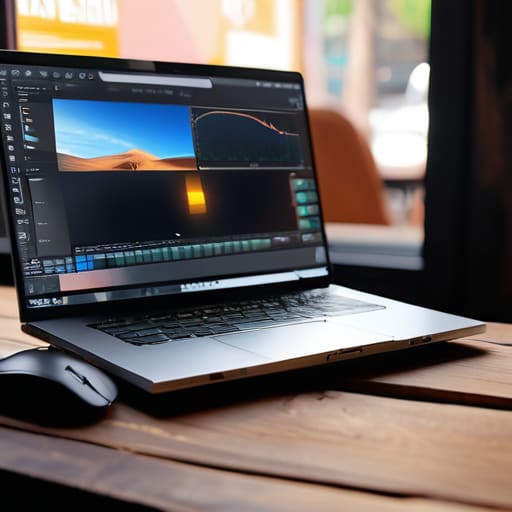
At the end of the day, building a portable monitor setup isn’t just about adding more screen real estate; it’s about removing the friction between your brain and your work. We’ve covered the technical heavy lifting—making sure your USB-C ports actually have the bandwidth to handle the load and selecting hardware that doesn’t feel like a brick in your backpack. If you get the connectivity right and pick a display that actually matches your laptop’s color profile, you’ve essentially unlocked a mobile command center. You aren’t just a person sitting in a coffee shop with a laptop; you’re a professional with a fully optimized digital environment that just happens to be anywhere you want it to be.
Don’t let the fear of a complicated setup keep you tethered to a single desk or a heavy, static workstation. The goal is to make your tools so seamless that they practically disappear, leaving you with nothing but the flow state you need to get things done. Whether you’re working from a tiny studio apartment or a transit hub in a city you’ve never visited, your setup should be able to keep pace with your lifestyle. Stop settling for a cramped, single-screen existence and start building a workspace that is as limitless as your ambition.
Frequently Asked Questions
How do I handle power management so my laptop doesn't die halfway through a session?
Nothing kills my flow faster than a “low battery” warning right when I’m deep in a build. If you’re running a portable monitor, you can’t rely on your laptop’s internal cell alone. I always carry a high-wattage GaN charger—something compact that can juice both my laptop and the monitor simultaneously. Alternatively, use a power bank with Power Delivery (PD) that hits at least 65W. Don’t let a dead battery turn your mobile setup into a paperweight.
Is it worth getting a dedicated stand, or can I just lean the monitor against something?
Look, if you’re just checking emails for twenty minutes, leaning it against a stack of books is fine. But if you’re actually settling in for a deep work session, get a dedicated stand. Leaning a monitor is a recipe for a viewing angle that kills your neck and a setup that feels unstable every time you bump the table. A real stand keeps your workspace clean and your focus where it belongs: on the screen.
How do I deal with the cable clutter when I'm working in a tiny cafe or a cramped Airbnb?
The secret is aggressive minimalism. I never travel with more than two cables: one high-bandwidth USB-C for the monitor and one GaN charger for everything else. If it doesn’t serve a dual purpose, it stays home. I also swear by small, magnetic cable organizers or even just a single Velcro strap to keep my lines from becoming a tangled mess on a tiny cafe table. If your setup looks like a bird’s nest, you’ve already lost your focus.