I’ve spent the last few years hopping between Airbnbs and tiny studio apartments, and if there’s one thing I’ve learned, it’s that a cramped, cluttered desk is the fastest way to kill your focus. Most people think you need a dedicated room with floor-to-ceiling shelving to be productive, but that’s a lie that keeps you tethered to a single zip code. When you’re working with limited square footage, you can’t afford to let your environment dictate your output; you need small office ideas that prioritize mobility and mental clarity over sheer bulk. If your setup feels like it’s closing in on you, it’s not a workspace—it’s a bottleneck.
In this post, I’m breaking down five specific ways to reclaim your space without sacrificing your professional edge. I’m not going to suggest buying a massive mahogany desk or a heavy filing cabinet; instead, we’re looking at tools and layouts that are seamless and cloud-centric. By the time you finish reading, you’ll have a blueprint for building a high-performance zone that fits into a corner, a backpack, or even a coffee shop table, ensuring your setup moves with you instead of holding you back.
Table of Contents
Prioritize the Cloud Over Hardware
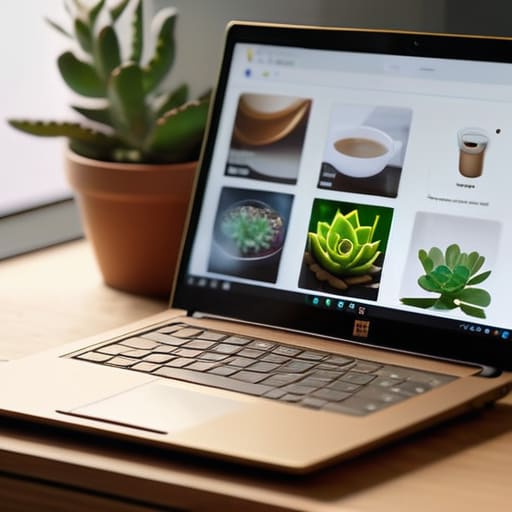
I’ve learned the hard way that lugging around heavy external drives and bulky NAS setups is a recipe for burnout. If you’re working in a small space—or moving between spaces—your data needs to be completely untethered. I rely on cloud-based version control and synchronized storage for everything I do, which means my “office” is essentially just whatever laptop I happen to have open.
Master the Art of Verticality
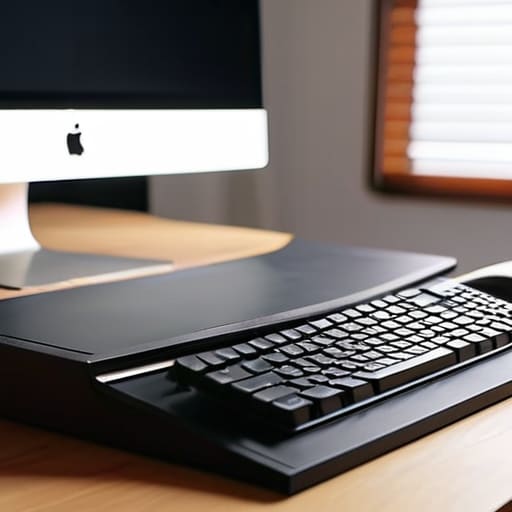
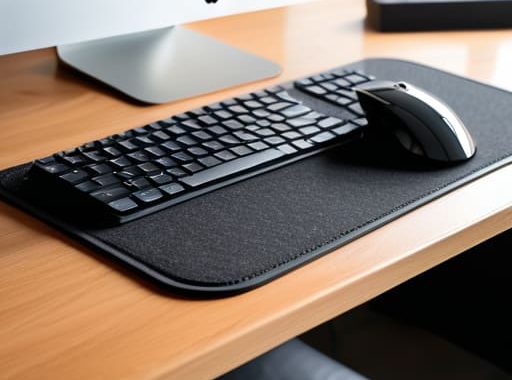
When your desk footprint is tiny, you have to stop thinking horizontally and start looking up. Most people waste so much room on their desk surface by letting peripherals and stationery just sprawl out everywhere. I use a heavy-duty monitor arm to clear my desk entirely, which gives me back that precious square footage for my mechanical keyboard and a single notebook.
Invest in Modular Peripherals
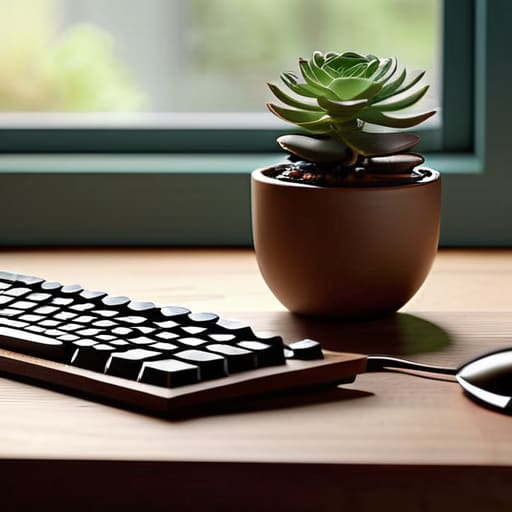
If you’re going to work in small or temporary spaces, your gear needs to be adaptable. I’m a huge advocate for modularity, which is why I spent so much time perfecting my mechanical keyboard setup. Being able to swap out keycaps or use a compact 65% layout means I can fit a high-end typing experience into a tiny corner of a coffee shop or a cramped studio apartment.
Control Your Ambient Environment
Small offices often suffer from being part of a larger, distracting living space. Since I don’t have a dedicated room with a door to slam, I have to use “digital walls” to stay in the zone. This is where my lo-fi ambient playlists come in; they aren’t just background noise, they are a functional signal to my brain that it’s time to work.
Implement a "Zero-Cable" Philosophy
Nothing kills the aesthetic—or the functionality—of a small setup faster than a “cable nest” under your desk. In a tight space, tangled wires aren’t just ugly; they’re a physical obstacle that makes cleaning and moving gear a nightmare. I make it a point to use wireless peripherals whenever the latency is negligible, and I use high-quality USB-C hubs to minimize the number of lines running to my machine.
The Bottom Line
Stop prioritizing aesthetics over mobility; if your gear is too heavy or too tethered to a single desk, you aren’t building a workspace, you’re building a cage.
Aim for a “zero-friction” setup where your cloud tools and hardware work together so seamlessly that you forget the tech is even there.
Invest in portability and cloud-based workflows first—the best office isn’t a specific room, it’s any spot with decent Wi-Fi and a clean surface.
The Philosophy of Space
A small office shouldn’t feel like a cage; it should feel like a launchpad. If your setup is so heavy and rigid that you can’t move it when inspiration strikes, you aren’t building a workspace—you’re building a bottleneck.
Elias Vandermeer
Build for Freedom, Not Just Function
At the end of the day, a small office shouldn’t feel like a cage. Whether you’re prioritizing a cloud-first workflow to keep your data accessible anywhere, or investing in a high-quality mechanical keyboard to make those long coding sessions more tactile, the goal is the same: reducing friction. You want to move from a cramped desk to a coffee shop or a temporary rental without feeling like you’ve left your brain behind. By focusing on portable hardware and minimalist cable management, you turn a tiny corner of a room into a high-performance node that actually supports your lifestyle instead of draining your energy.
Don’t get caught up in the trap of needing a massive, permanent command center to be taken seriously. Real productivity isn’t about how much square footage you occupy; it’s about how effectively you can execute your vision regardless of your surroundings. Your setup should be a tool that disappears when you’re in the flow, leaving you with nothing but the work itself. Build something that’s light enough to move and smart enough to stay out of your way, and you’ll realize that the best workspace isn’t a place you go—it’s a state of mind you carry with you.
Frequently Asked Questions
How do I keep my cable management clean when I'm constantly moving between different locations?
Honestly, stop trying to manage a massive nest of cables if you’re always on the move. It’s a losing battle. I switched to a “single-cable” philosophy. I carry one high-wattage GaN charger and a single USB-C hub that handles everything—power, display, and peripherals. Everything else is wireless or minimal. If a device requires a dedicated brick and three separate cords, it doesn’t belong in my travel kit. Keep it lean, keep it modular.
What are the best cloud-based tools to ensure my workflow stays seamless even on spotty Wi-Fi?
When the Wi-Fi starts acting up in some random cafe, I rely heavily on tools with robust offline modes. Notion is my go-to for documentation because it handles local caching well, so I don’t lose my train of thought mid-sentence. For code and config files, I stick to Git; as long as I commit locally, I can push to my remote repos once the connection stabilizes. Also, keep a lightweight terminal emulator handy—it’s much more resilient than a heavy browser-based IDE.
Is it possible to build a high-performance setup that doesn't take up my entire living space?
Absolutely. In fact, that’s the whole point of my entire lifestyle. You don’t need a dedicated room to run a high-performance stack; you just need to stop thinking in terms of “furniture” and start thinking in terms of “infrastructure.” If you lean into cloud computing and high-spec, compact hardware, your footprint shrinks while your capability stays huge. Focus on modularity and wireless peripherals. If it isn’t easy to pack up, it’s too big.