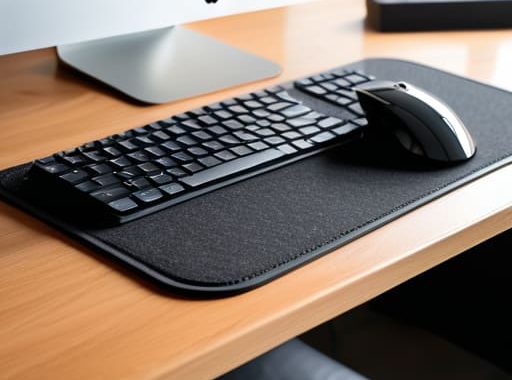
I was sitting in a cramped cafe in Lisbon last month, trying to push through a cloud deployment script, when the guy at the next table dropped a massive, RGB-saturated gaming rig onto the table. It looked like a spaceship, but it was basically a glorified paperweight that required a dedicated power outlet and a desk twice the size of his workspace. People act like a mechanical keyboard needs to be a heavy, flashing centerpiece to be “pro,” but that’s exactly how you end up anchored to a single spot. If your gear is too bulky to toss in a tech pouch and move to a new city, it’s not an asset—it’s a liability.
I’m not here to sell you on $500 custom builds that look pretty in Instagram photos but fail the portability test. I want to talk about finding that sweet spot where tactile precision meets a minimalist lifestyle. I’ll be sharing my actual, field-tested takes on choosing a mechanical keyboard that actually supports your flow without weighing down your bag. No hype, no unnecessary fluff—just practical advice on building a setup that stays invisible and seamless, no matter where you’re working from.
Table of Contents
The Frictionless Truth Mechanical vs Membrane Keyboards

Most people think the choice between mechanical vs membrane keyboards is just about that satisfying “click” sound, but for me, it’s about removing the barrier between my thoughts and the screen. Membrane boards feel mushy—like you’re typing on a sponge. There’s this weird, inconsistent resistance that forces you to bottom out every single time, which is a fast track to hand fatigue when you’re deep in a coding session.
When I’m working from a cafe with spotty Wi-Fi, I need my gear to be predictable. That’s where the nuance of linear vs tactile switches comes into play. Tactile switches give you that subtle bump to let you know the command registered without needing to smash the key, while linears are smooth and quiet for when I’m trying not to annoy the person at the next table. It’s not about being a gear snob; it’s about optimizing your tactile feedback so your hands can stay in a flow state. If your hardware is fighting your rhythm, you’ve already lost the battle.
Mastering Tactile Precision Linear vs Tactile Switches

When you’re deep in a flow state, the last thing you want is to fight your own hardware. This is where the debate of linear vs tactile switches actually matters for your workflow. Linear switches are smooth, consistent, and lack that physical bump, making them a favorite for anyone who wants a seamless, uninterrupted glide through lines of code. If you’re someone who types with a heavy hand, the lack of resistance can feel incredibly fluid, almost like the keys are disappearing under your fingertips.
On the other hand, tactile switches give you that distinct “bump” at the actuation point. This physical feedback is a game-changer if you struggle with typos or accidental keypresses while working in crowded cafes. It’s about knowing exactly when a command has registered without having to bottom out the key every single time. For me, finding the right keyboard switch actuation force is a balancing act; too light and I’m making mistakes, too heavy and my hands are fried by noon. Ultimately, it’s about choosing the sensation that helps you stay in the zone rather than distracting you from it.
Building a Setup That Actually Moves With You
- Prioritize hot-swappable PCBs. If you’re traveling between cities, you don’t want to be stuck with a switch type that feels wrong in a new environment; hot-swapping lets you change the entire feel of your board in twenty minutes without a soldering iron.
- Don’t overlook the weight-to-build ratio. A heavy brass plate feels premium on a permanent desk, but if you’re living out of a backpack, go for a lightweight aluminum or high-quality polycarbonate frame that won’t kill your shoulders during a long train ride.
- Invest in a high-quality coiled cable, but make sure it’s detachable. A fixed cable is a tether that ruins your portability; a USB-C detachable setup ensures you can plug into any laptop or tablet without being anchored to a specific hub.
- Match your switch profile to your environment. If you’re working from a quiet cafe or a shared hostel, loud clicky switches are a social death sentence—stick to silent tactiles or lubricated linears to keep the focus on your work, not the noise.
- Keep your keycaps low-profile if you’re on the move. While high-profile SA caps look aesthetic in photos, a lower profile reduces wrist strain when you don’t have a dedicated ergonomic desk setup to support you.
The Bottom Line for Your Mobile Setup
Don’t buy a keyboard just for the aesthetic; choose switches that actually match your typing rhythm so the hardware stays invisible while you work.
If you’re moving between cafes or co-working spaces, prioritize a build that balances tactile feedback with portability so you aren’t anchored to a single desk.
Treat your keyboard as a precision tool for your workflow—if it’s causing more distraction than focus, it’s the wrong setup for your lifestyle.
The Tool as an Extension of Flow
A keyboard shouldn’t be a piece of peripheral hardware you have to fight against; it should be a silent partner that disappears the moment you hit your stride, turning every keystroke into pure, unencumbered momentum.
Elias Vandermeer
The Final Setup
At the end of the day, choosing a mechanical keyboard isn’t about chasing a specific aesthetic or joining a niche hobbyist trend. It’s about understanding the physics of your own workflow. We’ve looked at how membrane boards create unnecessary friction, how the choice between linear and tactile switches can either smooth out your typing or provide the exact feedback your brain needs to stay in the zone, and how the right components make the hardware feel like an extension of your hands. Whether you’re building a custom board from scratch or just picking up a reliable pre-built, the goal is the same: minimizing the gap between thought and execution. When your tools are dialed in, they stop being something you have to manage and start becoming invisible components of your productivity.
My advice? Don’t overthink the gear until you’ve actually felt the difference in your daily grind. A setup is never truly finished; it evolves as your environment and your projects change. I’ve spent countless hours tweaking switch weights and keycap profiles just to find that perfect, seamless flow that allows me to disappear into my code or my configurations. Your gear should never be an anchor that keeps you tied to a single desk or a single way of working. Instead, aim for a setup that is adaptable, intentional, and entirely your own. Build something that moves with you, and let the tech fade into the background so you can actually get to work.
Frequently Asked Questions
How do I find a mechanical keyboard that actually fits in a tech pouch without being a total nightmare to carry?
Stop looking at full-sized boards. If you’re trying to shove a 104-key beast into a tech pouch, you’ve already lost the battle. Look for a 65% or 75% layout. You get the arrow keys you actually need without the dead space that kills your portability. Keep the build aluminum or high-quality plastic to save weight, and maybe skip the heavy coiled cable. If it doesn’t slide into your bag effortlessly, it’s just extra baggage.
Are there specific switches that won't drive everyone in the coffee shop next to me insane?
If you’re working out of a cafe, stay far away from anything “clicky.” Those blue switches are a social death sentence. You want something quiet that doesn’t disrupt the vibe. I usually reach for linear switches—think Cherry MX Reds or high-end boutiques like Gateron Oils. They have a smooth, silent travel that keeps the focus on your screen, not the noise you’re making. It’s about being professional without being a nuisance.
Is it worth investing in a custom build, or should I just stick to a solid pre-built for my mobile setup?
Look, if you’re constantly jumping between cafes and Airbnbs, don’t overcomplicate it with a heavy, custom enthusiast board. A high-quality pre-built—something like a Keychron—gives you 90% of the performance with zero of the maintenance headaches. Custom builds are great for a permanent desk, but they’re often too bulky or fragile for a nomad lifestyle. Stick to a solid pre-built that’s portable; your priority is a reliable flow, not a hobby project.