I was sitting in a cramped cafe in Lisbon last month, trying to debug a cloud configuration on a spotty Wi-Fi connection, when my “high-end” peripherals decided to fail me. I’d spent way too much money on a gaming-centric wireless mouse that promised millisecond response times, but in reality, it was just a heavy, over-engineered brick that died after three hours of use. Most people think you need a $150 piece of tech with a dozen programmable buttons to be “professional,” but that’s just marketing noise. If your gear is constantly demanding a recharge or adding unnecessary bulk to your tech pouch, it isn’t helping you work—it’s just another thing you have to manage.
I’m not here to sell you on the latest RGB-lit gimmick or tell you that more buttons equals more productivity. My goal is to help you find a wireless mouse that actually vanishes into your workflow, whether you’re at a minimalist desk setup or a tiny bistro table. I’ll be sharing what actually works when you’re living out of a backpack, focusing on battery reliability, sensor precision, and true portability. No hype, just the practical setups that actually let me focus on the code.
Table of Contents
Bluetooth Connectivity Options Cutting the Cord Permanently
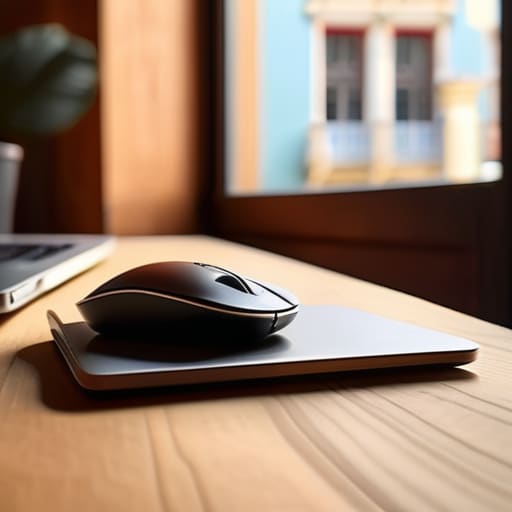
When you’re working from a cafe in Lisbon or a cramped Airbnb in Berlin, the last thing you want is a dongle sticking out of your laptop. This is where exploring different bluetooth connectivity options becomes a game changer for my workflow. Pure Bluetooth is great because it keeps your USB ports free for external drives or extra monitors, but there’s always a slight trade-off. If you’re doing heavy-duty design work or anything where precision is non-negotiable, you might notice a tiny bit of lag compared to a dedicated 2.4GHz receiver.
For my daily driver, I usually look for a hybrid approach. I want something that can switch between a lightning-fast connection for focused deep-work sessions and a standard Bluetooth mode for when I’m just browsing or traveling light. It’s also worth considering how this affects your power management; I’ve learned the hard way that a mouse with incredible battery life vs rechargeable capabilities can make or break a long trip. If I have to hunt for a Type-C cable every two days just to keep my cursor moving, the whole “seamless” dream falls apart.
Optical Sensor Technology Precision Without the Physical Tether
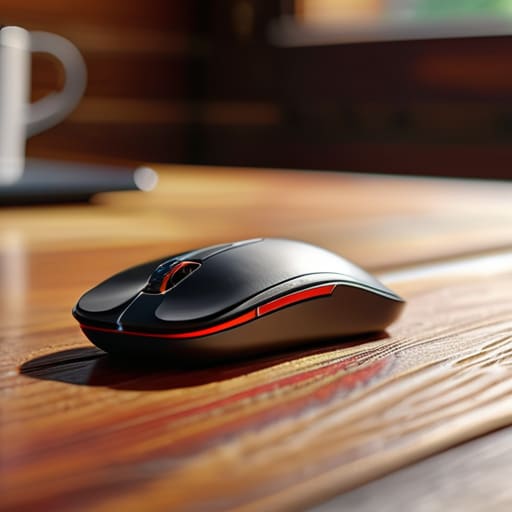
When you’re working from a cramped cafe table or a makeshift desk in a rental apartment, you don’t have the luxury of a massive mousepad to compensate for a cheap sensor. This is where optical sensor technology actually matters. I’ve learned the hard way that a subpar sensor will jitter the second you hit a textured surface or a bit of dust. You want something that tracks smoothly across almost any surface, because my “office” changes more often than my coffee order.
If you’re moving into more intensive tasks—maybe some light video editing or even just high-precision UI design—you need to look closely at the dpi settings explained in the product specs. Higher DPI isn’t always better; it’s about finding that sweet spot where the cursor feels like an extension of your hand rather than a floating icon. I aim for a sensor that feels completely transparent, meaning I stop thinking about the hardware and start focusing entirely on the code or the configuration I’m building.
Five Ways to Stop Your Mouse From Sabotaging Your Flow
- Prioritize multi-device pairing. If I’m switching between my laptop and a tablet in a cafe, I don’t want to be fumbling with a dongle; I need a mouse that lets me jump between screens with a single button press.
- Check the polling rate, not just the DPI. High DPI is flashy, but a consistent, high polling rate is what actually prevents that jittery, “laggy” feeling when you’re trying to navigate a complex UI on a mediocre Wi-Fi connection.
- Go for a rechargeable internal battery over replaceable AAAs. Nothing kills my focus faster than realizing I’m mid-sprint and my mouse is dead. I need something that I can top up via USB-C just like my phone.
- Don’t overlook the weight. If you’re traveling as much as I am, a heavy, chunky mouse is just extra dead weight in your tech pouch. Aim for something lightweight that feels like an extension of your hand, not a brick.
- Test the surface compatibility. Since I spend half my life working on wooden cafe tables or hotel desks, I need to know the sensor won’t lose its mind the second I move away from a dedicated mousepad.
The Bottom Line: Finding Your Flow
Don’t overcomplicate the tech; just prioritize a connection that doesn’t drop when you’re working from a cafe with spotty Wi-Fi.
Aim for a sensor that’s precise enough to handle your actual workload without needing a massive, dedicated mousepad everywhere you go.
Your gear should be an extension of your hand, not a distraction—if you’re thinking about your mouse, it’s probably the wrong one.
The Philosophy of Frictionless Gear
“A wireless mouse isn’t about the novelty of cutting a cord; it’s about removing the physical friction between your intent and the screen. If I have to think about my hardware, the hardware is failing me.”
Elias Vandermeer
The Final Setup Check
At the end of the day, picking a wireless mouse isn’t about collecting the most expensive tech on the market; it’s about finding that sweet spot where hardware meets habit. Whether you’re prioritizing a rock-solid Bluetooth connection to save a dongle in your bag, or hunting for a high-end optical sensor that doesn’t jitter when you’re working off a cafe table, the goal remains the same. You want a tool that doesn’t demand your attention. When you’ve balanced connectivity, sensor precision, and ergonomic comfort, the mouse effectively disappears, leaving you with nothing but your actual work and a clean, cable-free desk.
I’ve learned through a lot of trial and error—and a few cluttered backpacks—that your gear should serve your mobility, not restrict it. We live in a world where our offices are wherever we decide to open our laptops, so don’t let a tangled cord or a laggy sensor be the thing that breaks your flow. Invest in tools that are seamless and portable. Build a setup that moves with you, stays out of your way, and lets you focus on the big picture. After all, the best tech is the kind you forget you’re even using.
Frequently Asked Questions
How much does battery life actually matter when I'm working from cafes with limited outlets?
Honestly, it’s everything. When I’m hunkered down in a corner cafe with one working outlet and a dying laptop, the last thing I want to do is hunt for a spare USB port just to keep my mouse alive. I aim for gear that lasts weeks, not hours. If you’re serious about a mobile setup, look for mice with long-range efficiency or USB-C quick charging. Don’t let a dead peripheral kill your flow.
Is there a noticeable lag between Bluetooth and a 2.4GHz dongle when I'm doing more precise work?
If you’re doing anything that requires actual precision—like fine-tuning a UI layout or light photo editing—yes, you’ll feel it. Bluetooth is fine for browsing or casual emails, but it has this micro-stutter that can drive you crazy when you’re trying to be exact. For the heavy lifting, stick to the 2.4GHz dongle. It’s more stable and keeps that latency low enough that the tech actually stays invisible.
Can I find a wireless setup that doesn't feel like a bulky piece of plastic in my tech pouch?
Honestly, yeah. If you’re living out of a tech pouch like I am, you can’t afford to carry around a bulky gaming mouse that takes up half your bag. Look for “low-profile” or “travel-sized” mice—specifically ones designed for ultra-portability. I usually go for something slim with a magnetic charging lid or a built-in USB dongle that doesn’t stick out. If it doesn’t slide into a side pocket effortlessly, it’s not worth the space.