I was sitting in a cramped cafe in Lisbon last month, trying to debug a cloud deployment on a spotty Wi-Fi connection, when my neck finally gave out. I was hunched over my machine like a gargoyle, staring down at a screen that felt miles away. It’s the classic nomad trap: you invest thousands in high-end hardware and seamless cloud workflows, yet you’re still physically sabotaging yourself because you’re working off a flat surface. Most people think a laptop stand is just some bulky, aesthetic desk accessory meant for permanent home offices, but if it isn’t actually portable, it’s just more dead weight in your tech bag.
I’m not here to sell you on some overpriced, aluminum monstrosity that looks good in a staged Instagram photo but falls apart the moment you pack it in a backpack. I want to talk about tools that actually vanish into your workflow. I’ve tested dozens of setups while moving between cities, and I’m going to show you which ones actually provide the elevation you need without ruining your mobility. We’re looking for gear that stays out of your way so you can keep your focus exactly where it belongs.
Table of Contents
- Achieving Seamless Flow Through Adjustable Laptop Elevation
- Preventing Tech Neck Without Breaking Your Creative Rhythm
- Minimalist Essentials: How to Pick a Stand That Actually Travels With You
- The Minimalist's Bottom Line
- The Invisible Essential
- Final Thoughts on Mobile Ergonomics
- Frequently Asked Questions
Achieving Seamless Flow Through Adjustable Laptop Elevation
The real problem with working from a coffee shop or a temporary rental is that you’re almost always fighting your own anatomy. When your screen is sitting six inches below eye level, you aren’t just slouching; you’re actively sabotaging your focus. I’ve spent way too many nights dealing with the dull ache of preventing tech neck from becoming a permanent reality. To get into a deep flow state, you need your line of sight to be natural. Investing in some adjustable laptop elevation isn’t about being fancy—it’s about making sure your physical discomfort doesn’t become a distraction that breaks your concentration.
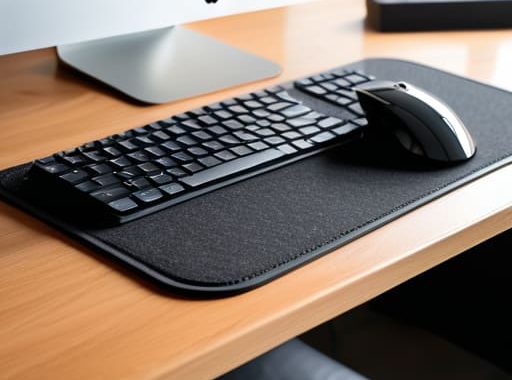
Once you’ve raised that screen to the right height, the game changes completely. You can’t effectively use a raised device for typing, so this is where a dedicated external keyboard and mouse setup becomes non-negotiable. It frees your hands and lets your shoulders drop into a relaxed position. For me, this transition is what turns a chaotic kitchen table into a legitimate workstation. When your gear is positioned correctly, the tech basically disappears, leaving you with nothing but the task at hand.
Preventing Tech Neck Without Breaking Your Creative Rhythm

The real issue with working from cafes or temporary rentals isn’t just the spotty Wi-Fi; it’s the physical toll of hunching over a screen for six hours straight. I’ve spent too many nights dealing with that dull ache at the base of my skull because I prioritized convenience over my spine. Preventing tech neck isn’t about buying a bunch of expensive, bulky posture correction tools that look like medical equipment; it’s about creating a workspace that respects your biology. When you lift your screen to eye level, you stop treating your neck like a crane and start treating it like part of a balanced system.
The trick to maintaining your flow is ensuring that your elevation doesn’t complicate your movement. If you’re using an external keyboard and mouse setup, the transition between tasks becomes almost invisible. You aren’t constantly shifting your weight or straining your wrists to reach awkward angles. You just settle in, your peripherals are exactly where they need to be, and you can actually stay in the zone without your body sending constant distraction signals to your brain.
Minimalist Essentials: How to Pick a Stand That Actually Travels With You
- Prioritize footprint over everything. If you’re working from a cramped cafe table or a tiny hotel desk, you don’t need a heavy aluminum slab; go for something collapsible that tucks into your tech pouch without adding bulk.
- Check the stability rating before you buy. There’s nothing that kills my focus faster than a shaky, lightweight stand that wobbles every time I type—especially if I’m using a heavy mechanical keyboard.
- Look for passive cooling benefits. Since I run a lot of cloud-based processes that can make a laptop run hot, a stand with an open-air design is a non-negotiable to keep the fans from ramping up and breaking my lo-fi vibe.
- Match the height to your external peripherals. A stand isn’t a standalone solution; it’s part of a system. Make sure the elevation aligns perfectly with your external keyboard and mouse so your wrists don’t take the hit.
- Avoid the “over-engineered” trap. You don’t need a stand with ten different adjustment points if you only move between two setups. Keep it simple, keep it lightweight, and make sure it disappears into your workflow.
The Minimalist's Bottom Line
Stop treating your laptop like a stationary desktop; if your stand doesn’t fit in your tech pouch, it’s just extra weight slowing you down.
Prioritize eye-level alignment over aesthetic clutter—your neck will thank you when you’re deep in a four-hour deep work session.
Aim for gear that disappears; the best setup is the one you forget you’re even using because the ergonomics just work.
The Invisible Essential
A good laptop stand isn’t about adding more gear to your bag; it’s about removing the physical friction between you and your work so the setup just disappears.
Elias Vandermeer
Final Thoughts on Mobile Ergonomics
At the end of the day, choosing a laptop stand isn’t about buying more gear to clutter your bag; it’s about protecting your physical longevity while you’re out in the world. We’ve talked about how the right elevation keeps your spine aligned and how preventing tech neck is essential for maintaining that deep, uninterrupted focus. Whether you’re working from a cramped cafe table in Berlin or a quiet corner of a library, your gear should serve one purpose: making the technology invisible so the work can take center stage. If your setup forces you to hunch or constantly readjust, it’s not a setup—it’s a distraction.
Don’t let your hardware dictate where you can or cannot be productive. The goal of a digital nomad lifestyle is freedom, and that freedom is only sustainable if you aren’t paying for it with chronic back pain or constant fatigue. Invest in tools that are lean, portable, and effective, and stop treating your workspace as a fixed destination. Build a setup that moves with you, adapts to any environment, and ultimately gets out of your way. Your best work happens when you aren’t thinking about your posture, but about the problem you’re solving.
Frequently Asked Questions
How do I balance the need for a stable stand with the requirement to keep my gear lightweight enough for travel?
It’s a constant trade-off. I used to carry these heavy aluminum blocks that felt great on a desk but were a nightmare in my backpack. Now, I look for carbon fiber or high-grade polymer stands. You want something that feels structural when you’re working, but folds down to almost nothing. If it adds more than a few hundred grams to your kit, it’s just dead weight. Prioritize rigidity over everything; a wobbly stand ruins your flow.
Are there specific stands that won't mess with my airflow when I'm running heavy cloud-based builds?
Definitely. If you’re pushing heavy builds through a cloud IDE or compiling locally, heat is your biggest enemy. Avoid those solid plastic riser stands; they basically act like blankets for your vents. I stick to minimalist, open-frame aluminum stands. They lift the chassis just enough to let the fans actually breathe. If the stand doesn’t have a wide-open architecture, it’s just going to throttle your performance when you need it most.
Can I actually use a laptop stand effectively with an external mechanical keyboard, or does it just make my desk feel more cluttered?
Honestly, it’s the only way to do it right. If you’re trying to type directly on a laptop that’s elevated, you’re asking for wrist strain and a ruined flow. Pairing a stand with an external mechanical keyboard is the gold standard for a mobile setup. It keeps your screen at eye level and your hands in a natural position. Just keep your cable management tight so the extra gear doesn’t turn into a mess.