I was sitting in a cramped cafe in Lisbon last month, trying to push through a cloud migration project, when my mouse decided to lag for the fifth time in ten minutes. I looked down at the mess of braided cables tangling around my laptop, and it hit me: most people think they need a $3,000 workstation to be productive, but they’re actually just tethered to a desk by outdated gear. We’ve been sold this lie that high-performance wireless peripheral connectivity is a luxury or a compromise on latency, when in reality, if your tech isn’t seamless and mobile, it’s just a bottleneck.
I’m not here to sell you on the latest overpriced RGB nonsense or tell you that every gadget on the market is worth the hype. Instead, I’m going to show you how I build a frictionless, portable setup that actually survives the reality of mediocre Wi-Fi and constant movement. I’ll break down what actually matters—reliability, latency, and battery life—so you can stop fighting your hardware and finally get back to the work that matters.
Table of Contents
24ghz vs Bluetooth Performance Choosing Your Flow
If you’re trying to build a truly seamless setup, you eventually hit the wall of deciding between a USB dongle and built-in Bluetooth. I’ve spent enough nights in cramped cafes to know that they aren’t created equal. Bluetooth is great for when you’re traveling light and just need to check some emails on a tablet, but it’s notoriously finicky. The latency can feel like you’re dragging your cursor through honey, which completely kills my focus.
When I’m actually deep in a project—especially when I’m precision-tuning a build or managing complex cloud deployments—I always reach for a 2.4GHz connection. The main reason is the wireless mouse polling rate; it’s just much higher and more stable. Bluetooth often struggles with signal drops when you’re trying to reduce signal interference in crowded areas with dozens of competing Wi-Fi signals. If you want a setup that actually stays out of your way, use the dongle for your primary tools and save Bluetooth for the low-stakes stuff.
Solving Signal Interference for a Frictionless Setup
If you’ve ever been mid-sprint on a project only to have your cursor stutter or skip, you know how much a bad connection kills your momentum. Most of the time, it isn’t a dead battery; it’s a crowded airwave. When I’m working out of a crowded cafe or a shared co-working space, the sheer amount of noise on the 2.4GHz band is insane. To keep things smooth, I’ve learned that reducing signal interference is less about buying more expensive gear and more about smart placement.
The easiest fix is usually the simplest: move your receiver closer. If you’re using a high-performance mouse, don’t plug the dongle into a port on the far side of your laptop. Use a short USB extension cable to bring that receiver right next to your desk mat. This minimizes the distance the signal has to travel through physical obstacles. When you prioritize a clean path for the signal, you’ll notice a massive jump in your wireless mouse polling rate stability, making the whole experience feel wired, even when it’s completely wireless.
5 Ways to Stop Your Gear From Ghosting You
- Stick to a dedicated 2.4GHz dongle for your mouse and keyboard if you’re doing anything high-precision; Bluetooth is fine for a casual spreadsheet session, but the latency will drive you insane during actual work.
- Keep your USB hubs away from your wireless receivers; if you’ve got a massive unshielded hub right next to your dongle, the electromagnetic noise is basically a signal killer.
- Prioritize “multi-device pairing” as a non-negotiable feature—I need to jump from my laptop to my tablet without digging through settings menus every single time.
- Don’t ignore battery health; I always keep a spare set of AAAs or a high-capacity power bank in my tech pouch because nothing breaks my flow faster than a dead sensor mid-task.
- If you’re working in a crowded cafe, assume the 2.4GHz band is already a mess; positioning your receiver as close to your peripheral as possible (using a short extension cable if needed) is the only way to stay stable.
The Bottom Line for a Mobile Setup
Don’t settle for Bluetooth-only if you’re doing high-precision work; a dedicated 2.4GHz dongle is worth the extra port space for the stability alone.
Treat your wireless environment like a network—keep your peripherals away from heavy interference sources if you want to avoid the dreaded lag spikes.
Prioritize gear that bridges the gap; the best tools are the ones that let you switch from your laptop to a tablet without a second thought.
The Goal of a Clean Setup
If I have to fight my hardware just to get through a morning of deep work, the gear has already failed. Wireless connectivity shouldn’t be a compromise; it should be the invisible bridge that lets you focus on the code instead of the clutter.
Elias Vandermeer
Cutting the Cord for Good
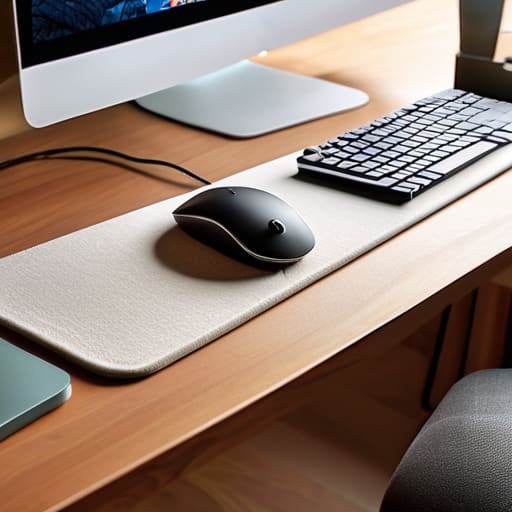
At the end of the day, getting your wireless connectivity right isn’t about chasing the latest gadget or having the most expensive gear on your desk. It’s about the technical nuances—knowing when to lean on the raw speed of a 2.4GHz dongle for gaming or high-stakes tasks, and when to let Bluetooth handle the lighter, multi-device switching that keeps a nomad’s workflow fluid. We’ve talked about managing interference and choosing the right protocols so that your tech stops being a distraction and starts being an extension of your intent. When you solve these small friction points, you realize that seamless connectivity is the foundation of a truly mobile professional life.
Don’t let your gear be the reason you stay tethered to a single desk in a single city. My goal has always been to build a setup that feels light, capable, and—most importantly—invisible. When your mouse doesn’t lag and your keyboard connects instantly regardless of what cafe Wi-Fi you’re fighting, you stop thinking about the tools and start thinking about the work. Build a setup that moves with you, because your workspace should adapt to your life, not the other way around. Go ahead, cut the cords, and see how much further you can go.
Frequently Asked Questions
Is it actually worth the extra cost to get high-polling rate wireless gear if I'm just doing dev work and not gaming?
Honestly? For dev work, it’s a hard pass. If you aren’t sweating over millisecond latency in a competitive shooter, that extra premium is just wasted budget. I care about stability and battery life, not whether my cursor updates 8,000 times a second. Save your money for a better mechanical switch or a more reliable cloud subscription. As long as the connection is snappy and doesn’t drop, high polling rates won’t change your workflow one bit.
How do I stop my wireless mouse from lagging when I'm working in a crowded cafe with everyone else on the same Wi-Fi?
If your mouse is stuttering in a packed cafe, it’s almost certainly 2.4GHz interference from everyone else’s routers and Bluetooth devices. Switch to a dedicated wireless dongle if you haven’t already—it’s usually more stable than standard Bluetooth in crowded spectrums. If that fails, try moving your receiver closer to the mouse using a USB extension cable. Getting that dongle away from your laptop’s internal shielding can be a total game-changer for latency.
Can I reliably run a full wireless setup—keyboard, mouse, and headset—without hitting major battery drain or connection drops?
Short answer: Yes, but you have to be intentional about it. If you just grab whatever’s on sale, you’ll be chasing charging cables halfway through a sprint. I aim for gear with high-efficiency sensors and long-range protocols. To avoid drops, I keep my high-polling rate stuff on dedicated 2.4GHz dongles and leave Bluetooth for the low-impact stuff. It’s about layering your tech so the battery life matches your travel rhythm, not fighting it.