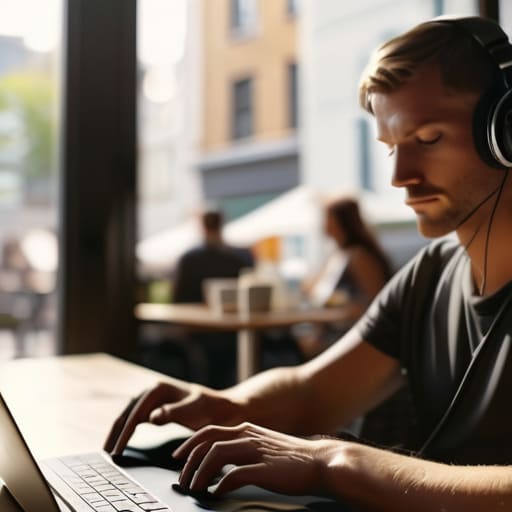
I was sitting in a cramped cafe in Lisbon last Tuesday, trying to debug a cloud deployment script, when the espresso machine started screaming right next to my ear. It’s that specific kind of sensory chaos that makes you realize most people treat gear like a status symbol rather than a tool. Everyone wants to talk about the “audiophile experience” or the prestige of a certain brand, but honestly? I don’t care about gold-plated connectors or marketing fluff. When I’m working from a spot with mediocre Wi-Fi and a loud crowd, I just need noise cancelling headphones that actually do the one job they were built for: making the rest of the world disappear.
I’m not here to give you a spec-sheet lecture or tell you which brand is trending on social media. Instead, I’m going to break down what actually matters when you’re trying to maintain a flow state in the real world. I’ll share my unfiltered take on which models provide the most seamless isolation and which ones are just overpriced plastic. My goal is to help you find gear that integrates into your life without the headache, so you can stop fighting your environment and finally get back to work.
Table of Contents
Mastering Active Noise Cancellation Technology for Deep Work

Most people think ANC is just about turning down the volume of the world, but it’s actually about more than that. When I’m working out of a cramped cafe in Lisbon or a noisy hostel in Berlin, I’m looking for more than just quiet; I’m looking for a way to manipulate my environment. Real active noise cancellation technology works by using microphones to pick up external frequencies and then generating an opposing wave to neutralize them. It’s not perfect—it won’t make a construction site vanish—but it’s incredibly effective at smoothing out the jagged edges of a chaotic room.
For me, the goal is always about improving cognitive focus without the mental fatigue that comes from constantly fighting distractions. If you’re trying to dive into a complex cloud architecture build, you can’t afford to have your brain constantly processing the clatter of dishes or the hum of an air conditioner. I’ve found that the best way to use this tech is to pair it with a steady, low-frequency lo-fi track. This creates a consistent sonic floor that makes the technology feel even more seamless, effectively turning a chaotic public space into a private, digital sanctuary.
Reducing Ambient Noise to Reclaim Your Cognitive Focus

It’s not just about the silence; it’s about the mental bandwidth you recover when the world stops leaking into your headspace. When I’m working from a cafe in a city I’ve only been in for three days, the constant hum of espresso machines and chatter isn’t just annoying—it’s a cognitive tax. Every time a door slams or a group starts laughing nearby, my brain performs a micro-calculation to filter it out, and that’s energy I should be spending on my code or my client deliverables. By reducing ambient noise through high-quality gear, you aren’t just blocking sound; you’re essentially building a portable fortress for your concentration.
I’ve found that the real trick to improving cognitive focus is finding that sweet spot where the technology feels invisible. You don’t want to feel like you’re wearing heavy machinery on your head; you want a pair of wireless over-ear headphones that act like a digital mute button for the environment. When you can finally kill that low-frequency drone from an air conditioner or a nearby construction site, you stop fighting your surroundings and start actually working.
My Rules for Picking Gear That Actually Works
- Prioritize long-term comfort over everything else. If you’re working from a cafe in Lisbon for six hours, I don’t care how good the ANC is if the clamping force gives you a headache by noon. Look for breathable pads and a lightweight build.
- Test the “Transparency Mode” before you buy. You need to be able to switch from deep focus to hearing a flight announcement or a barista calling your name without fumbling with buttons or ripping the headset off.
- Check the battery life for real-world travel. A “20-hour battery” sounds great on paper, but once you’re running high-bitrate lo-fi tracks and active cancellation, it drops fast. I never travel without a pair that can reliably clear a full workday and a flight.
- Don’t ignore the software ecosystem. The best headphones let you customize the EQ and ANC levels via a clean app. If the software feels clunky or requires a bloated desktop client, it’s going to get in the way of your flow.
- Look for multi-point connectivity. If you’re jumping between a client call on your laptop and a quick podcast on your phone, you shouldn’t have to manually re-pair every single time. It should just work, seamlessly.
Cutting Through the Noise: My Final Thoughts
Don’t just buy the most expensive pair; look for gear that actually integrates with your workflow and disappears when you’re in the zone.
Use ANC as a tool for cognitive management, not just a luxury—it’s about creating a portable “focus bubble” regardless of where your Wi-Fi is.
The goal isn’t to listen to music; it’s to eliminate the friction between your brain and your work by silencing the chaos around you.
The Sound of Focus
“I don’t buy headphones for the audio fidelity or the brand name; I buy them for the silence. In a world where I’m constantly jumping between loud cafes and sketchy airport lounges, a good pair of ANC cans is the only way to build a portable wall between me and the chaos.”
Elias Vandermeer
The Final Layer of Your Mobile Setup
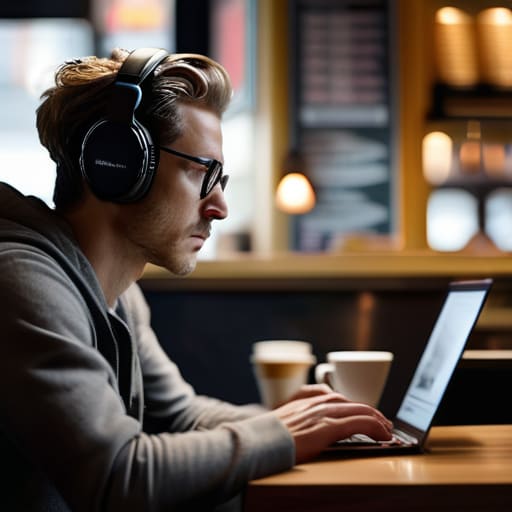
At the end of the day, investing in high-quality noise cancelling headphones isn’t about being a tech enthusiast or chasing the latest gadget; it’s about protecting your mental bandwidth. We’ve looked at how mastering ANC technology and strategically reducing ambient noise can turn a chaotic coffee shop or a loud airport lounge into a private, high-performance studio. Whether you’re fine-tuning your cloud deployment or just trying to clear your inbox, these tools act as the invisible barrier between you and the distractions that kill your flow. If your gear doesn’t help you reclaim your cognitive focus, then it’s just extra weight in your backpack.
My philosophy has always been that your workspace should be wherever you happen to be sitting. You shouldn’t be tethered to a quiet room to get your best work done. By integrating seamless, portable tech into your routine, you’re essentially building a portable sanctuary that moves with you. Don’t let a noisy environment dictate your productivity levels. Grab a solid pair of cans, drop your favorite lo-fi playlist, and build your own zone—anywhere in the world.
Frequently Asked Questions
How much battery life am I actually going to lose if I keep ANC running all day while traveling?
Look, the short answer is: expect about a 20% to 30% hit. If your headphones claim 40 hours of playback, running ANC will probably drag that down closer to 28 or 30. When I’m hopping between trains or working in loud cafes, I never trust the sticker numbers. My rule of thumb? Always carry a small power bank. Don’t let a dead battery be the reason your focus breaks mid-transit.
Is it worth dropping the extra cash on premium models, or can I get the same focus with mid-range gear?
Look, if you’re just sitting in a quiet home office, mid-range gear is fine. But if you’re like me—working from a noisy cafe in Lisbon or a train station in Berlin—the premium models are worth every cent. The difference isn’t just “better sound”; it’s how effectively they kill the specific, annoying frequencies that break your flow. If your gear can’t make the world vanish instantly, it’s just a distraction.
Will wearing these for long stretches during deep work sessions give me that annoying ear pressure feeling?
Honestly, that “cabin pressure” feeling is the worst. It usually happens because ANC works by emitting anti-noise waves, which your brain can sometimes mistake for a change in atmospheric pressure. If you’re sensitive to it, look for headphones with adjustable ANC levels rather than just an on/off switch. I usually dial it back about 20% during long sessions; it’s enough to kill the hum of a coffee shop without making my ears feel like they’re in a vacuum.