I spent three years thinking I needed a dual-monitor setup with perfectly aligned bezels to stay efficient, only to realize I was just creating more cable clutter and more mental friction. People love to sell you on these complex, multi-screen “command centers” that look great in a studio apartment but actually break your focus every time you switch tabs. The truth is, chasing more screens often just adds more distraction; real ultrawide monitor productivity isn’t about having more hardware, it’s about removing the barriers between your brain and your code.
I’m not here to give you a list of expensive specs or marketing fluff from a tech giant. I want to show you how to actually use that extra screen real estate to make your tools disappear so you can finally hit a deep flow state. I’ll walk you through my personal workflow—from window management to cloud-based integration—and explain how to build a setup that actually adapts to your life instead of forcing you to work around it.
Table of Contents
Ditch the Dual Monitor vs Ultrawide Setup Friction
I used to be a die-hard dual monitor person. I thought having two separate screens was the ultimate way to stay organized, but I quickly realized I was just creating more friction. Every time I moved my head to look from one screen to the other, I felt that tiny, subconscious jolt of distraction. Plus, the bezels in the middle were a constant visual reminder that my workspace was fragmented. When you’re trying to find your flow, those physical gaps act like speed bumps for your brain.
Switching to a single, seamless display completely changed my dual monitor vs ultrawide setup debate. Instead of fighting with two different power cables and two sets of inputs, I have one clean, minimalist connection. It’s all about that curved monitor workflow optimization; the slight bend brings the edges into your natural field of view, so you aren’t constantly scanning back and forth. When you pair a high-resolution ultrawide with some solid software for window management, your entire digital environment feels cohesive. You aren’t just looking at two different windows; you’re working within one continuous, expansive canvas.
Mastering Resolution for Professional Multitasking
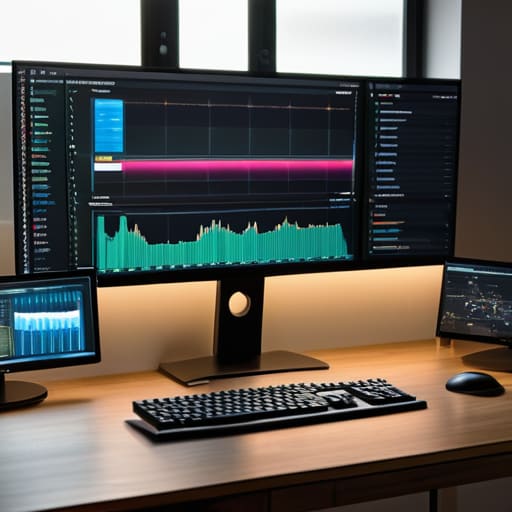
If you’re just plugging in a massive screen and expecting magic to happen, you’re doing it wrong. High resolution is the difference between a workspace that feels expansive and one that just feels blurry and overwhelming. When I’m jumping between a terminal window and a heavy documentation site, I need every pixel to count. For me, finding the right resolution for professional multitasking means ensuring that text stays crisp even when I’ve tiled four different windows across the display. If you’re running a 1440p ultrawide, you’ve hit that sweet spot where you have enough real estate to breathe without having to scale your UI to a ridiculous degree.
The real secret to making this work, though, isn’t just the hardware—it’s how you manage the space. I can’t stand seeing people struggle with windows overlapping or getting lost in a sea of tabs. You need to invest some time in learning software for window management, like Magnet or Rectangle, to snap your apps into precise grids. Once you nail that aspect ratio for coding and spreadsheets, the monitor stops being a “big screen” and starts acting like a seamless digital canvas. It’s about removing the friction of resizing windows so you can stay in your zone.
Stop Fighting Your Screen: 5 Ways to Actually Use That Extra Real Estate
- Stop window tiling manually. If you aren’t using a window manager like FancyZones or Magnet, you’re wasting half your screen real estate just clicking and dragging edges. Map out your zones once and let your tools snap into place.
- Treat your monitor like a timeline, not a desktop. I keep my primary workspace—code editor or terminal—dead center, and push my “reference” apps like Slack, Spotify, or documentation to the far edges. It keeps the distraction away from your focus zone.
- Audit your peripheral clutter. An ultrawide is a massive visual anchor; if your desk is a mess of unmanaged cables, the screen just makes the chaos feel bigger. Keep the setup minimal so your eyes stay on the digital workspace, not the physical mess.
- Master the “Focus Pivot.” Use the massive width to keep your deep-work tool front and center, but keep a secondary, low-priority window open on the periphery for things like system monitors or cloud deployment logs. It lets you monitor progress without breaking your flow.
- Don’t ignore the verticality. If you’re doing heavy documentation or long-form reading, don’t just scroll horizontally. Use software to split the screen into vertical columns—it mimics the feel of reading a physical page and stops that weird “neck swivel” fatigue.
The Bottom Line: Making the Ultrawide Work for You
Stop treating your monitor like a piece of furniture and start treating it like a workflow tool; if you aren’t using window management software to snap your apps into place, you’re wasting the screen’s potential.
Prioritize screen real estate over sheer pixel count—it’s better to have enough room to keep your cloud terminals and documentation visible simultaneously than to have a high-res screen that feels cramped.
Remember that a seamless setup is about reducing friction, so choose a display that fits your portable lifestyle or a desk setup that allows you to transition from deep work to quick tasks without constantly rearranging your digital environment.
## The Friction of the Bezel
“Dual monitors are just a constant reminder of the physical barriers in your way; an ultrawide lets the hardware disappear so you can actually stay in the zone without your eyes constantly jumping over plastic borders.”
Elias Vandermeer
The Bottom Line
At the end of the day, switching to an ultrawide isn’t just about buying a bigger piece of glass for your desk; it’s about eliminating the digital friction that breaks your concentration. We’ve talked about why ditching the dual-monitor bezel nightmare is a massive win for your workflow, and how dialing in your resolution ensures your tools stay visible without feeling cluttered. When you stop wasting mental energy managing window snaps and fighting with mismatched screen scales, you finally give your brain the space it needs to actually do the heavy lifting. It’s about moving from a fragmented workspace to a seamless digital environment where the hardware just gets out of your way.
I’ve spent enough time in cramped cafes and temporary rentals to know that your gear shouldn’t be a cage. Whether you’re building a permanent home lab or trying to optimize a mobile setup, the goal remains the same: your tools should be invisible so your work can be unmistakably high-level. Don’t let a mediocre screen setup be the bottleneck for your potential. Invest in the real estate you need to stay in the zone, and stop letting your hardware dictate how much you can actually get done. Build for flow, not just for show.
Frequently Asked Questions
Is it actually worth the extra desk space if I'm constantly moving between different remote workspaces?
Honestly? If you’re constantly hopping between cafes or Airbnbs, a massive ultrawide is a liability. I’ve learned the hard way that desk real estate is a luxury you can’t always count on. For a true nomad, I’d stick to a high-end 14-inch laptop paired with a portable 15-inch secondary screen. It gives you that split-screen flow without the headache of hunting for a desk deep enough to actually fit a 34-inch panel.
How do I manage window snapping without it becoming a chaotic mess of overlapping apps?
Honestly, if you’re still dragging windows around with a mouse, you’re wasting mental energy. I use PowerToys FancyZones on Windows—it lets me create custom grid layouts so my apps snap exactly where I want them. If you’re on Mac, Magnet is the move. The goal is to make window management invisible. You shouldn’t be thinking about where a window sits; you should just be thinking about the code or the config.
Won't a massive ultrawide setup make it harder to stay mobile and stick to my minimalist gear philosophy?
That’s the classic friction point, right? If you’re trying to live out of a backpack, a 49-inch beast is a non-starter. But my philosophy isn’t about being tied to one massive desk; it’s about seamlessness. I use a high-end portable monitor or a compact ultrawide for my “deep work” sessions in a fixed spot, but my entire stack lives in the cloud. The goal is a scalable setup, not a heavy one.